Announcing New and Up-To-Date Video and Spine Surgery Directories
By: Ben Parr, Spine-Health.com Interactive Content Manager
September 25th, 2008
Hello everyone!
The Spine-Health.com team has been hard at work creating a better and simpler experience for all of our users. Since last year we've switched to newer and smarter technology that allows us to expand our content, speed up the site, and improve our navigation. To that end we're launching a series of new directories for our doctor-written, doctor-reviewed content, including our articles and videos.
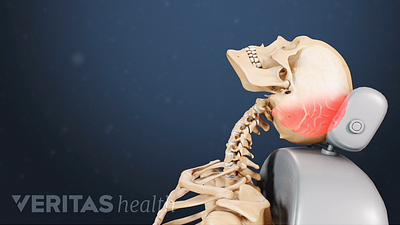
First, we have launched an updated video directory. This directory divides our video content into categories. Our primary categories include:
- A complete listing of our videos
- Interactive Anatomy Videos
- Videos On Pain Conditions
- Videos on Back and Neck Surgery
- Videos on Pain Treatment Options
We have also created a new directory for the main types of back, neck, and spine surgery we cover. It includes (but is not limited to) the following:
- A full listing of our back surgery articles
- Decompression Surgery
- Spinal Fusion
- Instrumentation
- Kyphoplasty
- Laminectomy
- Lumbar Spine Surgery
- Minimally Invasive Surgery
- Neck Surgery
- Spine Surgeons
- Surgery Recovery/Postoperative Care
- Vertebroplasty
In the coming days and weeks, we will be adding many more directories to Spine-Health.com to make it easier to find the content you are searching for, or to make browsing the vast, 2000+ pieces of doctor-written content that we have on our site an easier process.
So watch out for new content, new features, and new updates every week on the Spine-Health.com Blog (we've also updated our blog interface) and the Spine-Health.com Pain Forums and Message Boards.
If you have questions, issues, or suggestions about the site's content, interface, layout, or message boards, you are welcome to email me at bparr@spine-health.com- Ben Parr, Spine-Health.com Interactive Content Manager
5 Easy Tips For Keeping the Entire Family Healthy for Back-to-School
By: Jay Triano, DC, PhD
September 10th, 2008

It's back-to-school time, and that means trips to school, scraped knees, books, back packs, and school sports. The activity can be great for you and the kids, but heavy back packs and bad posture can hurt your kids and their backs.
So here are 5 Easy Tips that will help keep the entire family healthy for back-to-school:
Find a good back pack! A good pack is light, snug and comfortable to wear. It should be made of vinyl or canvas, with two wide padded shoulder straps and a waist strap. All straps should be used and adjusted so that the pack is snug against the wearer’s back and not “falling away” from the body.
A quality back pack is only as good as the way it is packed! Make sure the heaviest objects are close to the body and any bumpy, odd-shaped objects are placed on the outside, away from the back.
Moving your kids into their college dorm room or new apartment? Lifting heavy boxes can give you back pain. Be sure to label your boxes so that helpers know what can be found inside and how heavy they will be. Tape the boxes so that they are sturdy and the contents do not shift while being handled.
Before lifting, make sure that you have balanced footing and good grip (boxes with handles are ideal).
Face your work. Stand so that your nose, hips and toes are facing forward. Keep the object as close to your body as possible and bend from the hips and knees.
Hit the books but help your back! When you are studying or reading, use a book stand so that your book is at eye level. This will reduce the amount of strain on your neck and shoulders from having your book lay flat. It also has the added bonus of giving you extra desk space!
Returning back to school sports after some time off during the summer? Remember that your body may not have done that sport in awhile and will need extra time to warm up.
Be sure to warm up for a minimum of 10-15 minutes before playing. The warm up should involve simple movements that “simulate” your sport and get the heart rate up. Always stretch after your sport.
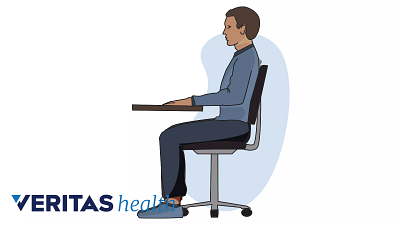
Sitting in class with good posture will reduce the strain on your neck, shoulders and low back. It will also help keep you attentive during class! Sit with your shoulders back, chin tucked in and a gentle "C curve" in your low back. Don't arch your lower back or slump forward. Your ears, shoulders and hips should be in a straight line. Make use of your breaks! Between classes stand up, walk around and stretch.
Watch Your Back!
Do you sit in front of a computer nearly every day? Then you need to watch this important video to learn helpful ergonomic tips to protect your back!
Get the Flash Player to see this player.
Also share and favorite this video on YouTube
Move More, Sleep Better and Longer

(Spine-Health.com) -- New research presented at the 22nd Annual Meeting of the Associated Professional Sleep Societies (APSS) shows that “an acute session of moderate aerobic exercise, but not heavy aerobic or moderate strength exercises” can improve the amount and quality of sleep for people with insomnia (without resorting to pharmaceutical sleep-aids).
What exactly does "acute" mean in this context? Merriam-Webster defines acute as “having a sudden onset, sharp rise, and short course”, so “moderate, but not heavy, aerobic exercise” is like a brisk 20-30 minute walk.
In this new research, 36 patients, all with primary chronic insomnia, were divided into four groups:
- Moderate aerobic exercise (e.g. walking)
- Intense aerobic exercise (e.g. running)
- Moderate strength exercise (e.g. pilates)
- A control group (no exercise)
Of the above 4 groups, the moderate aerobic exercise group (exercise walking) showed the most sleep improvements:
- 54% reduction in time it takes to fall asleep
- 36% less awake time during the night
- 37% increase in total sleep time
These findings highlight the importance of moderate physical exercise to help treat insomnia.
In general, about 30 percent of adults are thought to have symptoms of insomnia. It is more common among elderly people, women, and those suffering from a pain condition.
Source: American Academy of Sleep Medicine, http://www.aasmnet.org/Articles.aspx?id=926Scoliosis Awareness Month
An estimated 6 million people in the United States have some form of scoliosis, and it affects people of all races, ages and socio-economic classes. Scoliosis is not a disease. It is the term used to describe an abnormal, lateral (side-to-side) curvature of the spine. The onset of scoliosis is usually between 10 and 15 years of age (around the time of an adolescent's big growth spurt). While some cases of scoliosis have an identifiable cause (like congenital spine deformities, cerebral palsy or spina bifida), more than 80% of the cases diagnosed are idiopathic, which means there is no known cause.
Why it's important to be aware of scoliosis.
Catching the beginning of scoliosis in children and teenagers ensures the most options for treating the curvature and slowing or stopping the progression. Children's bones are not yet fully hardened, so non-surgical treatments like bracing are frequently employed -- to not only attempt to correct existing abnormalities, but in severe cases to delay the need for surgery until the child is older.
How do you check for scoliosis and what are the signs?
Most students are given the Adam’s forward bend test routinely in school when they are in fifth and/or sixth grade to determine whether or not they may have scoliosis. The test involves the student bending forward with arms stretched downward toward the floor and knees straight, while being observed by a health care professional. This angle most clearly shows any asymmetry in the spine and/or trunk of the adolescent’s body. The health care professional is looking for abnormal appearance in the spine, hips and shoulders, specifically:
- A hump or uneven appearance in the rib cage.
- Any lateral deviation in the spine (asymmetry).
- Shoulders at different heights.
- One hip more prominent than the other.
What should you do if you suspect you or your child has scoliosis?
Make an appointment to be evaluated by a physician. If a visual/external exam indicates an abnormal spinal curve, the doctor will probably order an x-ray or, if the patient is a child under the age of 11, an MRI to determine the degree of the curvature. A lateral spinal curve greater than 25-30 degrees is considered significant. A curve greater than 45 degrees is severe and requires aggressive treatment.
Want to learn more?
Read more about scoliosis, its causes and treatment options in the Spine-Health.com Scoliosis.
Spine-health launches new Web site design
Spine-health is very pleased to announce the release of our newly designed Web site. In February, we launched part one of our new site focusing heavily on the behind-the-scenes technology platform to enable dynamic content serving, increase site speed, and other enhancements. Today’s release marks the first wave of usability enhancements – new design, new functionality and enhanced navigation. Go ahead and take it for a test drive. The Spine-health library of more than 2,000 doctor written and reviewed articles is now even easier to search and navigate, and we have made important upgrades to our popular Pain Blog, Chats, and Message Boards to improve the user experience for our 10,000+ registered members and regular contributors.
On Spine-health, you won’t find a few articles on a wide range of topics. Our focus and our passion is providing the most in-depth and trusted content on the Web specifically about pain topics like: back pain, chronic pain, arthritis, osteoporosis, spinal stenosis and their co-morbidities such as depression, stress and sleep problems.
Please take a look, and more importantly, tell me what you think. We are working hard to create a culture of constant improvement. Please email me at machler@spine-health.com with your comments on what you like and your suggestions on how to better improve the site. Keep looking, as there will be a lot more to follow in the coming months.
Thanks for your help and support – and don’t forget to sit up straight in your chair :)
Mark Achler
CEO, Spine-health
10 ways to get enough calcium if you're lactose intolerant
May is National Osteoporosis Month, so now is a good time to take a look at your diet and figure out if you're getting enough calcium and Vitamin D to keep your bones strong and back straight for decades after you get your AARP card.

In general, the recommended daily allowance (RDA) of calcium (for women -- who need more than men and tend to be the hardest hit by osteoporosis) is between 1,000 and 1,200 mg. A serving of milk is about 300mg of calcium, so you're supposed to be drinking three glasses of milk per day. If you're not, then you're probably not getting enough calcium.
But what should you do if don't care for milk… or if you're lactose intolerant? What if you're counting calories and just can't squeeze the extra into your diet?
Don't fret. Here are 10 tips for adding and keeping that important calcium in your daily routine.
- Quit drinking soft drinks. High phosphate levels in the blood (which can be caused by consuming large quantities of pop) leach calcium from your bones and prevent the absorption of new calcium.
- Get enough Vitamin D. Calcium is absorbed by the body and used only when there is enough vitamin D in your system. A balanced diet should provide an adequate supply of vitamin D from sources such as eggs and liver. Since most people don’t care for liver, go ahead and enjoy your omelets (and add some spinach!)
Don't forget that sunlight also helps the body naturally absorb vitamin D, and with enough exposure to the sun, additional food sources may not be necessary. - Eat your beans (baked). One cup of baked beans has 154mg calcium (remember the target is 1,200mgs/day).
- Canned Salmon. Three ounces of canned salmon contain 181mg calcium. Salmon also is an excellent source of omega-3 fatty acids.
- Calcium fortified foods. Many foods are now calcium-fortified. You can find calcium fortified soy milk, almond milk, rice milk, orange juice, cranberry juice, breakfast cereals, breakfast bars at almost every grocery store.
- An 8oz glass of calcium-fortified orange juice provides about 300mg of calcium – which is about the same as a single serving of milk.
- One cup of calcium fortified soy milk has nearly 300mgs of calcium AND can be used over calcium fortified cereal. Two great sources of calcium in one meal.
- Oatmeal isn't just for breakfast. One cup of oatmeal not only provides 100–150mg of calcium, it is also a versatile add-in to many other foods and can be used to goose up the calcium quotient in your breakfast cereal, added to yogurt, or even mixed in with your favorite baking recipes.
- Eat your veggies... especially spinach, broccoli and dark green leafy vegetables. Kale, parsley, broccoli, spinach and other dark green leafy veggies each provide about 100mgs of calcium per serving. In addition to just making an effort to eat your greens, you can also try substituting raw spinach for iceberg lettuce on your sandwiches and in your salads.
- Go Nuts. Almonds and brazils nuts contain about 100mgs of calcium per serving and are both recommended snacks for people on low carb diets.
- Drink your latte. My personal favorite! A Starbucks Grande latte provides almost half your daily calcium needs and is such a pleasure. If you’re lactose intolerant, you can get your latte made w/ soy instead of cow milk.
If the gourmet fancy coffees wreak havoc with your budget, just mix a cup of regular coffee with a cup of milk (or skim milk to reduce the calories, or soy milk to eliminate lactose) – microwave the milk first to make your homemade latte nice and hot. - Take an Over-the-Counter Calcium Supplement. You can add a calcium supplement like Os-Cal® or even Tums® to your daily routine to make up the calcium gap. Word of caution… Just because a single Tums has 200mgs of calcium doesn’t mean you can take 5 a day to meet your RDA. It is ultimately and primarily an antacid, not a calcium supplement, and as such it can have a detrimental effect on your digestive system if taken long term.
Sources:
- Digestive Diseases Clearinghouse – Lactose Intolerance (http://digestive.niddk.nih.gov/ddiseases/pubs/lactoseintolerance/)
- Vegan Society – Calcium (http://www.vegansociety.com/html/food/nutrition/calcium.php )
Chantix Helps Quit Smoking
Everyone is aware that smoking is not good for your health, but many do not realize that smoking is also closely linked to chronic pain.
In my experience as a spine physician, if a patient has had pain for a long time and continues to smoke, he or she is highly unlikely to find pain relief from any type of treatment. The reason for this is not entirely understood, but it is probably due to multiple factors, such as blood vessel spasms and not allowing oxygen to get to tissues.
For people who are in a lot of pain, this information alone should be good motivation to help them kick the smoking habit, but many patients will need some assistance to stop smoking due to the strong physical and emotional addictive qualities of smoking.
Previously, a drug in the antidepressant line of pharmaceuticals was approved for use in quitting smoking, called Zyban. This drug worked by keeping a neurotransmitter (serotonin) around longer in the brain, which seemed to helped decrease the craving for nicotine.
Lately, a newer drug, Chantix, has been released that has a different mechanism of action. Chantix is designed to bind right to the nicotine receptors in the brain. Many patients even report that after starting Chantix, smoking is repulsive to them and they can’t stand the smell.
Like all drugs it does have some side effects (such as difficulty sleeping, loss of appetite, nausea, etc…), but the one that has gotten the most media attention is a possible link to suicidal ideation. While this is a concern, it should be noted that many people who are trying to quit smoking are already depressed, so it is difficult to know if this is a causal link or not.
In my clinical experience, Chantix has worked remarkably well, especially for people who are motivated to quit smoking.
By: Peter Ullrich, Jr., MD
About the Bloggers
The Spine-health.com blog is an educational and editorial tool authored and maintained by Spine-health.com staff. Unlike most Spine-health.com articles, this is area is not peer-reviewed. Specific questions concerning your health should always be discussed with your doctor.
Comments are published on the fly, but are moderated by our medical director, Dr. Peter Ullrich, Jr., Spine-health.com medical advisors, and Spine-health.com staff. Thanks for using the Spine-health.com blog - be sure to subscribe to this blog in your RSS reader!
Peter Ullrich, Jr., MD
Doctor Ullrich is an orthopedic spine surgeon at the NeuroSpine Center of Wisconsin and co-founder and Medical Director for Spine-health.com.
He started Spine-health.com and is actively committed to it because he believes that patients deserve the same quality of medical information as physicians – that is, information that has been independently peer reviewed by other physicians to ensure accuracy, completeness, and lack of any commercial influence.
Now, in addition to the peer reviewed back pain articles, Dr. Ullrich blogs – as often as he can – about personal opinions and issues he wants to address regarding spine medicine and in particular spine surgery. Read more about Dr. Ullrich at his practice page.
Stephanie Burke
Stephanie co-founded Spine-health.com and runs the day to day operations of the site. She frequently contributes to the blog, commenting on breaking news, insights and - especially - information sent in from the thousands of people visiting Spine-health.com everyday. All in the hope that full information will help individuals make better choices. Read more about Stephanie. Contact Stephanie at Sburke at spine-health.com.
Sylvia Marten
Sylvia Marten heads up the marketing efforts at Spine-health.com. In her role, Sylvia leverages over 11 years of experience in sales and marketing, business development, and strategic consulting to create successful experiences between Spine-health’s unique chronic pain consumers/patients and physicians - and the companies that wish to market to them.
Sylvia will occasionally blog about trends and events in the chronic pain market, in online media and in marketing as they pertain to the health information space. She has a special interest in osteoporosis, exercise and fitness, and health on the Internet. Contact Sylvia at Smarten at spine-health.com.