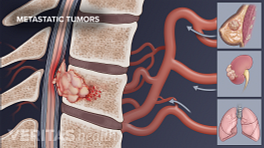
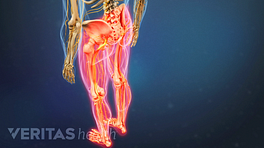
While some spinal tumors have no symptoms, most eventually lead to back pain and could also cause neurological deficits, such as numbness or weakness. Spinal tumor symptoms can vary greatly based on where the tumor is located and whether or not it is cancerous.
In This Article:
Pain from a Spinal Tumor
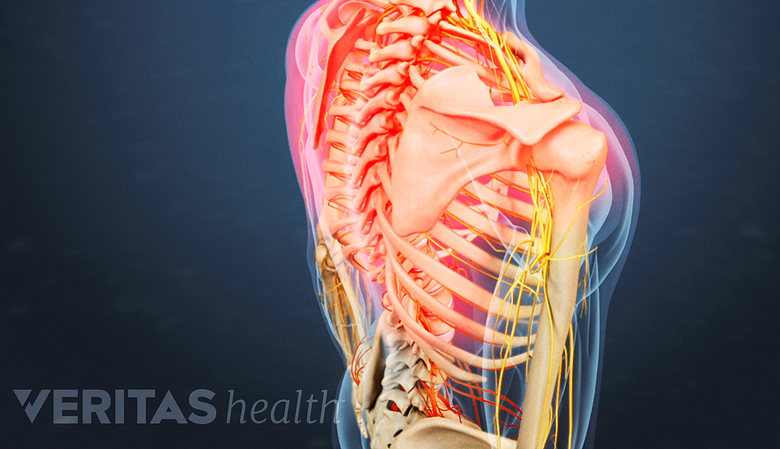
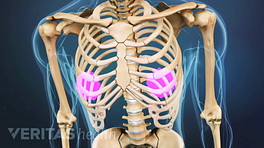
Pain from spinal tumors is typically experienced in the upper or mid-back.
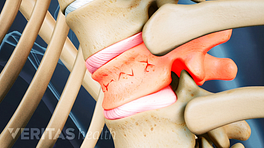
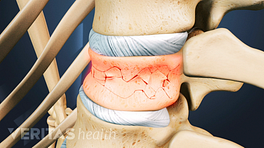
Tumors in the spinal column may cause back pain by damaging healthy tissues, such as the vertebrae (bones), and/or by compressing (pinching) the nerves
Spinal tumor pain may feel like one or more of the following:
- Upper or middle back pain. While most spinal pain is located in the lower back or neck, pain from a spinal tumor is more likely to be felt in the upper or middle back. About 70% of spinal tumors are located in the thoracic spine. 1 Ciftdemir M, Kaya M, Selcuk E, Yalniz E. Spinal tumors of the spine. World J Orthop. 2016; 7(2): 109-116. doi: 10.5312/wjo.v7.i2.109.
- Deep ache. Spinal tumor pain may feel like an achiness or discomfort deep within the back, rather than feeling painful on the surface or skin. 2 Laufer I, Sciubba, DM, Madera M. Surgical Management of Metastatic Spinal Tumors. Cancer Control. 2012; 19(2): 122-8. doi:10.1177/107327481201900206
- Sharp or shock-like pain. Pain from a spinal tumor may be limited to a specific region in the back, or it could travel along a nerve root (radicular pain) or the spinal cord (myelopathic pain). Shock-like pain could radiate into the chest, abdomen, leg(s), or arm(s).
- Feels worse at night than during the day. Spinal tumor pain typically does not diminish with rest or activity avoidance, and it may intensify at night, causing disturbed sleep. 2 Laufer I, Sciubba, DM, Madera M. Surgical Management of Metastatic Spinal Tumors. Cancer Control. 2012; 19(2): 122-8. doi:10.1177/107327481201900206 , 3 Lee JS, Jung C-H. Metastatic Spinal Tumor. Asian Spine J. 2012; 6(1):71-87. doi: 10.4184/asj.2012.6.1.71.
- Feels worse in the morning when waking up. For some people, spinal tumor-related back pain may be at its worst when waking up in the morning.
- Worsens with touch or compression. Pain may flare up or intensify when the spinal tumor or nearby region is touched or undergoes compression, such as during strenuous activity. 3 Lee JS, Jung C-H. Metastatic Spinal Tumor. Asian Spine J. 2012; 6(1):71-87. doi: 10.4184/asj.2012.6.1.71.
- Lower back or neck pain. About 20% of spinal tumors are in the lumbar spine (lower back) and about 10% are in the cervical spine (neck). 1 Ciftdemir M, Kaya M, Selcuk E, Yalniz E. Spinal tumors of the spine. World J Orthop. 2016; 7(2): 109-116. doi: 10.5312/wjo.v7.i2.109.
Spinal tumor-related pain may also be located in multiple levels of the spine, such as in the thoracic spine and lumbar spine, when there are multiple tumors or a tumor has become bigger.
Red Flag Symptoms with Back Pain
When back pain is accompanied by one or more of the following symptoms, it requires immediate medical attention.
- Loss of appetite
- Unplanned weight loss
- Nausea or vomiting
- Fever, chills, or shakes
These symptoms could indicate cancer or another serious condition is present.
Neurological Deficits from a Spinal Tumor
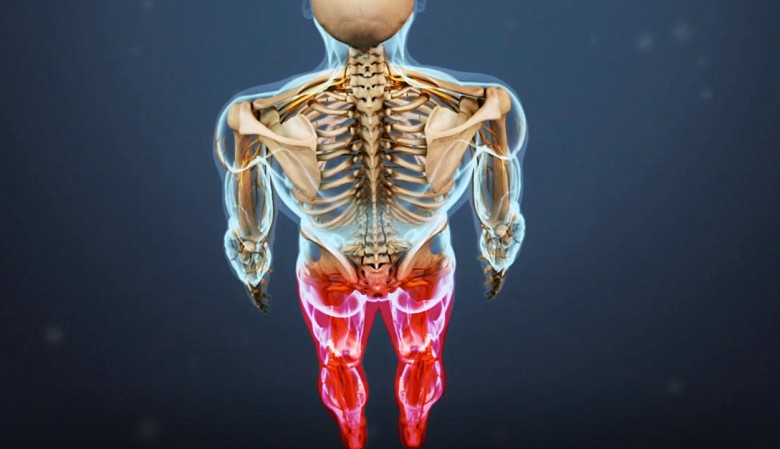
A spinal tumor causes spinal cord compression, leading to leg numbness and weakness.
When a spinal tumor grows big enough to compress the spinal cord or a nerve root, neurological deficits can occur. Examples include:
- Radiculopathy. When one or more nerve roots become compressed or inflamed, pins-and-needles tingling, numbness, and/or weakness can radiate into the chest, abdomen, leg(s), or arm(s). These signs can vary based on the location of the tumor within the spine. A thoracic spinal tumor is more likely to radiate symptoms into the chest or abdomen, whereas a lumbar spinal tumor is more likely to radiate symptoms into the legs.
- Myelopathy. When the spinal cord becomes compressed or inflamed, neurological deficits may be experienced anywhere in the body at or below the level of spinal cord compression. For example, numbness or weakness could travel into both legs and reduce coordination for walking.
- Cauda equina syndrome. When the cauda equina (bundle of nerve roots that descend from the spinal cord) becomes compressed in the lumbar spine, it can cause numerous neurological deficits beneath the level of compression, such as numbness or tingling in the saddle region (inner thighs, genitals, and buttocks), walking dysfunction, and/or loss of bowel and/or bladder control.
Spinal tumors may cause neurological deficits with or without back pain and/or leg pain.
- 1 Ciftdemir M, Kaya M, Selcuk E, Yalniz E. Spinal tumors of the spine. World J Orthop. 2016; 7(2): 109-116. doi: 10.5312/wjo.v7.i2.109.
- 2 Laufer I, Sciubba, DM, Madera M. Surgical Management of Metastatic Spinal Tumors. Cancer Control. 2012; 19(2): 122-8. doi:10.1177/107327481201900206
- 3 Lee JS, Jung C-H. Metastatic Spinal Tumor. Asian Spine J. 2012; 6(1):71-87. doi: 10.4184/asj.2012.6.1.71.