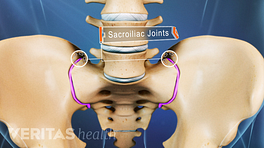
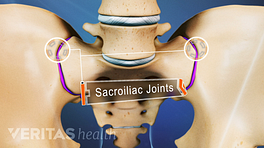
There is no single test that can diagnose sacroiliac joint dysfunction. For this reason, it is important that a combination of diagnostic test results are taken into consideration together to form an accurate diagnosis.
Diagnosing sacroiliac joint dysfunction can be difficult because the symptoms mimic other common conditions, such as leg pain from a lumbar herniated disc or back pain from facet joint arthritis.
See Radiculopathy, Radiculitis and Radicular Pain
A diagnosis is usually arrived at through a physical examination and/or an injection (utilized to block the pain).
In This Article:
- Sacroiliac Joint Dysfunction (SI Joint Pain)
- Sacroiliac Joint Dysfunction Symptoms and Causes
- Accurate Diagnosis of Sacroiliac Joint Dysfunction
- Treatment Options for Sacroiliac Joint Dysfunction
- Surgical Treatment for Sacroiliac Joint Pain
- Sacroiliac Joint Dysfunction Video
Medical History and Physical Examination
The diagnostic process usually begins with a collected medical history, including information on current pain and symptoms. Additionally, a medical history includes information on diet, sleep, and exercise/activity habits, as well as any recent or past injuries that may contribute to the cause of SI joint pain.
See Preparing to See A Doctor for Back and Neck Pain
There are several orthopedic provocation tests that can rule out or identify the sacroiliac joint as the pain source, including:
- Sacral thrust test, in which pressure is applied to the back of the hips while lying face down (prone) on an examination table. The sacral thrust test is considered positive when this pressure reproduces pain.
- Distraction test, in which pressure is applied to the front of the hips while lying face up (supine). A positive test occurs when pressure applied to the hips reproduces pain.
- FABER test, in which while lying on the back, one leg is kept straight while the other foot touches the inside of the straight knee. Pressure is applied to the SI joint by gently pushing the bent knee down and out. Modifications to this test can include pulling the bent knee straight up toward the chest, and/or moving it from side-to-side. Downward pressure may also be applied to the opposite hip. The FABER test is considered positive if these movements reproduce pain or cannot be completed due to limited range-of-motion. This test can reproduce pain in the hip, lower lumbar region, and/or the SI joint and pin-pointing the pain location is important before concluding this test as positive for SI joint pain.
- Palpation tests, in which deep thumb pressure is applied directly over the entire SI joint on each side. A positive test is tenderness over the affected SI joint, which should then be correlated with other provocative tests. When several types of motion palpation tests are included with clusters of provocative tests such as those described above, the highest level of accuracy was found. 1 Arab AM, Abdollahi I, Joghataie MT, et al. Inter- and intra-examiner reliability of single and composites of selected motion palpation and pain provocation tests for sacroiliac joint. Musculoskeletal Science & Practic 2009;14(20):213-221 , 2 van der Wurff P, Buijs EJ, Groen GJ. A multitest regimen of pain provocation tests as an aid to reduce unnecessary minimally invasive sacroiliac joint procedures. Arch Phys Med Rehabil 2006; 87(1):10-14
As noted above, the sacroiliac joint is confirmed as the pain source if a combination of movement tests reproduces a similar pain response over the involved SI joint and, other causes have been ruled out.
Additional Diagnostic Tests
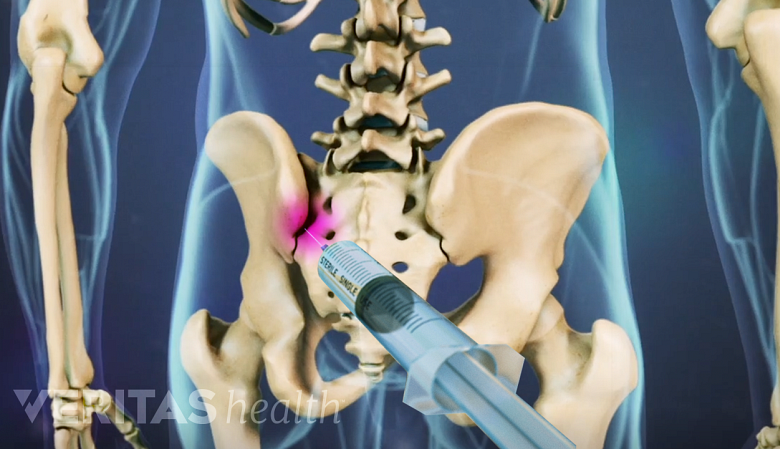
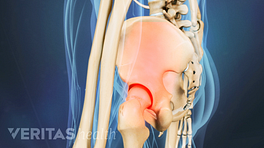
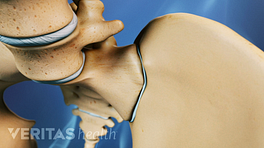
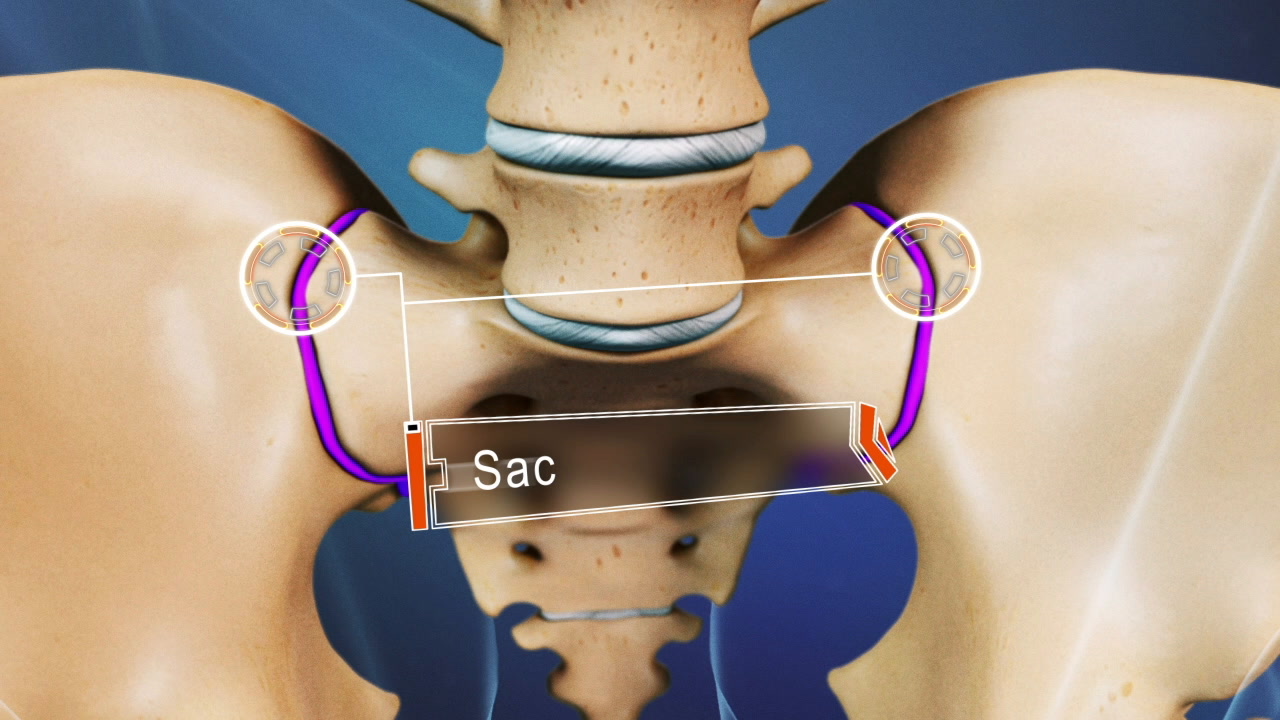
An SI joint block helps identify if the joint is a source of low back pain.
After a medical history is collected and a physical exam is conducted, additional testing may be needed to confirm the sacroiliac joint as the pain source, such as:
- Sacroiliac joint injection, sometimes called a sacroiliac joint block, consists of injecting a numbing solution (typically lidocaine or bupivacaine) into the sacroiliac joint. If the injection relieves pain, the sacroiliac joint can be confirmed as the pain source. Fluoroscopic guidance (“live” x-ray) is typically used to guide the needle to the joint, although the use of ultrasound guidance has been reported to be equally accurate, thus eliminating ionizing radiation patient exposure associated with fluoroscopic guidance techniques. 3 Soneji N, Bhatia A, Seib R, Tumber P, Dissanayake M, Peng PW. Comparison of fluoroscopy and ultrasound guidance for sacroiliac joint injection in patients with chronic low back pain. Pain Pract 2016 Jun;16(5):537-44
- Diagnostic imaging tests, including x-ray, CT, or MRI scans, can be used to rule out other possible causes of lower back/pelvic pain, such as a herniated disc or facet joint arthritis.
See Introduction to Diagnostic Studies for Back and Neck Pain
The gold standard method for diagnosing the SI joint as the pain source is an injection test but, 3 or more positive tests can be used in early clinical decision making to reduce the number of unnecessary injections. 4 Kennedy DJ, Engel A, Kreiner DS, Nampiaparampil D, Duszynski B, MacVicar J. Flouroscopically guided diagnostic and therapeutic intra-articular sacroiliac joint injections: a systematic review. Pain Med 2015; 16(8):1500-18
Imaging tests such as x-ray, CT, and MRI are typically less helpful than clinical tests since pain responses cannot be imaged and often, many abnormal imaging findings are non-symptomatic and/or not clinically relevant. Thus, relying on imaging only could lead to unnecessary more invasive interventions.
- 1 Arab AM, Abdollahi I, Joghataie MT, et al. Inter- and intra-examiner reliability of single and composites of selected motion palpation and pain provocation tests for sacroiliac joint. Musculoskeletal Science & Practic 2009;14(20):213-221
- 2 van der Wurff P, Buijs EJ, Groen GJ. A multitest regimen of pain provocation tests as an aid to reduce unnecessary minimally invasive sacroiliac joint procedures. Arch Phys Med Rehabil 2006; 87(1):10-14
- 3 Soneji N, Bhatia A, Seib R, Tumber P, Dissanayake M, Peng PW. Comparison of fluoroscopy and ultrasound guidance for sacroiliac joint injection in patients with chronic low back pain. Pain Pract 2016 Jun;16(5):537-44
- 4 Kennedy DJ, Engel A, Kreiner DS, Nampiaparampil D, Duszynski B, MacVicar J. Flouroscopically guided diagnostic and therapeutic intra-articular sacroiliac joint injections: a systematic review. Pain Med 2015; 16(8):1500-18