I have compiled a summary of the various pain management procedures: starting from conservative through to surgical. I hope that this is useful information for some of you. These have been grouped as below, as doctors will normally initially treat back pain with conservative procedures first and if these don't work move to medication, then minimally invasive techniques and finally surgery:
1. Conservative
2. Medication
3. Minimally Invasive Techniques
4. Surgery
Of course, the suitability of some of these procedures depends upon the patient's specific condition.
Conservative Treatments
Exercise can be very beneficial for mild to moderate back pain, but if you have severe back pain be very careful, and don't do too much.
Aerobic exercise
Non weight-bearing exercises such as upright cycling, cross-training in a gym, or any sort of exercise in water are very beneficial.
Swimming
Swimming is beneficial - backstroke with gentle swinging of your arms puts the least strain on your spine. If your neck is OK you can do breast stroke or front crawl. If you can't swim just get into the shallow end and try as best as you can to jog from one side of the pool to the other.
Cycling
Cycling is very good non-impact, non-weight-bearing exercise so long as you do not adopt a racing position, which would put considerable strain on your lower spine and neck.
Yoga and Pilates
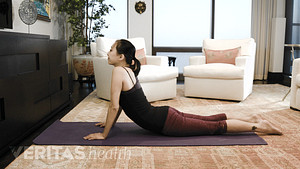
If you have a good basic level of strength, technique, and flexibility you may benefit from yoga but you should take advice. Pilates is excellent to improve your flexibility, core stability, balance and muscle strength.
Physiotherapy
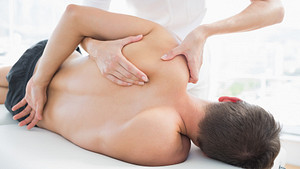
Physiotherapy is the core treatment for patients with spinal, and musculoskeletal problems. Physical therapy interventions may include: Spinal and extremity manipulation; therapeutic exercise; electrotherapeutic and mechanical agents; functional training; provision of aids and appliances; patient education and counseling; documentation and coordination, and communication.
Osteopathy and Chiropractic
These are manipulation-based techniques that focus more on function than structure. They can be beneficial in many pain problems, and are often recognised by insurance companies. However, if you have severe back pain, please be very cautious about using a chiropractor.
The following links on this site give additional information:
http://www.spine-health.com/treatment/physical-therapy/physical-therapy-...
http://www.spine-health.com/wellness/exercise/exercise-and-back-pain
Medications
Non-steroidal anti-inflammatory drugs (NSAIDs)
These are first generation drugs such as ibuprofen (Nurofen) or diclofenac (Voltarol). They can be very effective at relieving musculoskeletal pain and are generally well tolerated although some patients can get side effects, particularly gastrointestinal bleeding and fluid retention.
COX-2 inhibitors
These are second-generation anti-inflammatory agents, which have been available for the last few years. There are many drugs available in this class, for example Arcoxia, Celebrex or Bextra. They are generally better tolerated than NSAIDs and are associated with less risk of gastrointestinal bleeding.
Mild opioids
This group of drugs includes, in roughly increasing strength, codeine, dihydrocodeine, and tramadol (which also has non-opioid analgesic properties). Codeine and dihydrocodeine preparations are often given in combination with paracetamol.
Strong opioids
This group of drugs includes buprenorphine, morphine, and fentanyl. These drugs are used for pain that has not been adequately controlled by weaker drugs.
Anti-neuropathic treatments
Neuropathic pain (nerve pain) is very common in many pain problems from spinal pain through to cancer pain. Its incidence is often underestimated and it is important that you realise that it does not respond well to treatment by normal painkillers. You will likely need special drugs, such as amitriptyline, carbemazepine, gabapentin, or pregabalin.
The following links on this site give additional information:
http://www.spine-health.com/treatment/pain-medication/medications-back-p...
http://www.spine-health.com/topics/conserv/medications.html
Refer also to http://messageboard.spine-health.com/viewtopic.php?id=3392
Minimally Invasive Techniques
Acupuncture (not sure which category this belongs in)
Acupuncture is designed to inspire shifts in the body and mind by increasing circulation in places of tightness, weakness, and pain. By addressing issues of tissue congestion and stagnation, movement and communication of bodily fluids, blood, lymph and the nervous system is encouraged.
Facet rhizotomy injection
In some low back pain programs, if three facet block injections provide good but temporary relief of the patient's pain, a facet rhizotomy injection may be recommended. The purpose of a facet rhizotomy injection is to provide lasting low back pain relief by disabling the sensory nerve that goes to the facet joint.
Facet joint injections
Facet joint injections are performed for facet joint pain. Facet joints can be injected with long acting local anaesthetic and anti-inflammatory steroids, which can alleviate facet joint pain for long periods.
Facet joint denervation
This is a straightforward procedure that is normally carried out if you have had a successful result from facet joint injections. Special needles are carefully placed under continuous fluoroscopy so that their tips lie exactly on the nerves that carry pain signals from the facet joints. Radiofrequency energy is then passed through the needles so that that tissue at the tip is heated to about 80 degrees C for about a minute. This coagulates and inactivates the nerves.
Pulsed radiofrequency treatment
Passing alternating radiofrequecy energy through tissues without significantly heating it can selectively inactivate pain-carrying nerve fibres, which tend to be smaller in diameter than the fibres that control muscles and allow normal sensation. Conventional radiofrequency treatment results in the coagulation of all tissues at the tip of the needle, including all nerve tissue. In most situations this does not matter, but in some situations it is important to maintain as much normal nerve function as possible.
Discography
Discography involves the insertion of a thin needle into one or more discs. Then either saline is injected into the disc to see if it is painful, or radio-opaque contrast dye is injected and x-rays will be taken to show the internal structure of the disc.
Epidural steroid injection
The word 'epidural' simply refers to a layer of supporting tissue outside the spinal cord. In an epidural a solution of long acting local anaesthetic, long acting anti-inflammatory steroid, and sometimes other pain modifying drugs is injected into the epidural space in the spine.
Transforaminal epidural injection
This is an important adjunct to epidural steroid injection and the two are normally done together. If you have lumbar radiculopathy or cervical radiculopathy, you will probably also have one or more transforaminal epidural injections.
Sacrolliac joint steroid injection
In the first instance a solution of long-acting local anaesthetic, long acting anti-inflammatory steroid, and sometimes other pain modifying drugs is injected into one or both joints. If this is successful the joint can then be denervated in a similar way to facet joint denervation.
Selective nerve root block (SNRB) for diagnosis and back pain management
Another common injection, a selective nerve root block (SNRB), is primarily used to diagnose the specific source of nerve root pain and, secondarily, for therapeutic relief of low back pain and/or leg pain.
Lumbar sympathetic block
Injection needles will be positioned and then there are three main ways to produce the block: injection of a long acting local anaesthetic to produce a diagnostic block to safely see if your pain can be treated this way; injection of a neurolytic substance such as phenol or alcohol to destroy the lumbar sympathetic nerves; and the use of radiofrequency energy to similarly destroy the nerves in a highly controlled way.
Stellate ganglion block
The stellate ganglion is a collection of autonomic sympathetic nerves, which lies in front of the spine at the level of your larynx. It can be a site where pain signals from the face, heart, or arm are processed. It can therefore sometimes be useful to block it.
Dekompressor discectomy
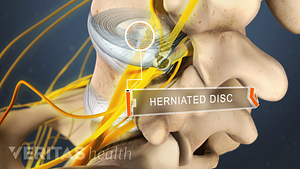
The Stryker Dekompressor is a relatively new technique for the decompression of contained lumbar herniated discs. A special device the size of a needle is inserted into the affected disc. This then rotates like a drill removing some of the nucleus of the damaged disc, thus decompressing it and allowing the bulge to reduce. This in turn reduces the pain from both the disc and the nerve root.
Percutaneous disc nucleoplasty
This is a relatively new technique for the decompression of contained lumbar herniated discs. A special device the size of a needle is inserted into the affected disc. This probe has radiofrequency electrodes at its tip and is slightly angled. It is moved around inside the disc vapourising a very controlled amount of disc nucleus, typically 1 - 2 ml.
Vertebroplasty
It involves the injection of bone cement into the crushed vertebral body, which stabilises it and reduces pain by reducing movement at the fracture site. It is well established and straightforward to perform, usually as a day-case procedure. A newer alternative treatment is Kyphoplasty.
Kyphoplasty
It involves the insertion of needles into the damaged vertebral body, through which balloons are passed. These are inflated under high pressure, which expands the VCF and corrects the deformity. Once corrected, liquid bone cement is injected into the vertebra to permanently fix the restored shape.
Spinal cord stimulation
Spinal cord stimulation can be very effective at treating nerve pain (neuropathic pain) and dysfunction from a number of different conditions. It has been shown to be particularly effective at relieving resistant nerve pain such as lumbar radiculopathy following spinal surgery. It involves the implantation of a wire and a device the size of a matchbox.
Sacral nerve root stimulation
This is a new and effective treatment for a number of loosely related bladder and bowel control problems. The other main treatment alternative is spinal cord stimulation. The main risk is infection, which can occur in up to 5% of patients.
Intrathecal pump implant
Intrathecal drug delivery devices are advanced pain management systems for patients whose pain cannot be adequately be controlled by conventional oral or systemic analgesics. Delivery of strong painkillers such as morphine directly into the cerebrospinal fluid can avoid many of the unpleasant side effects of conventional drug delivery.
The following link on this site give additional information:
http://www.spine-health.com/treatment/injections/injections-back-pain-re...
Surgery
Discectomy
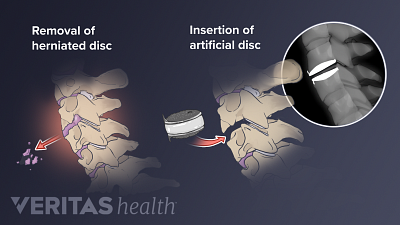
For people with disk problems, the surgeon forms a "window" in a portion of the outer ring of the disc. Then the surgeon removes a portion of the disc nucleus, releasing the pressure on the nerve. Some surgeons perform a microdiscectomy, which may require removal of only a small portion of the lamina (part of the vertebrae).
Laminectomy
A laminectomy removes the entire lamina. Removal of the lamina allows more room for the nerves of the spine and reduces the irritation and inflammation of the spinal nerves. The lamina does not grow back. Instead, scar tissue grows over the bone, replacing the lamina, and protects the spinal nerves.
Fusion
There are two main types of spinal fusion, which may be used in conjunction with each other:
Posterolateral fusion places the bone graft between the transverse processes in the back of the spine. These vertebrae are then fixed in place with screws and/or wire through the pedicles of each vertebrae attaching to a metal rod on each side of the vertebrae.
Interbody fusion places the bone graft between the vertebra in the area usually occupied by the intervertebral disc. In preparation for the spinal fusion, the disc is removed entirely. A device may be placed between the vertebra to maintain spine alignment and disc height. The intervertebral device may be made from either plastic or titanium. The fusion then occurs between the endplates of the vertebrae. Using both types of fusion is known as 360-degree fusion. Fusion rates are higher with interbody fusion. Two types of interbody fusion are:
1. Anterior lumbar interbody fusion (ALIF)- an anterior abdominal incision is used to reach the lumbar spine.
2. Posterior lumbar interbody fusion (PLIF) - a posterior incision is used to reach the lumbar spine.
In most cases, the fusion is augmented by a process called fixation, meaning the placement of metallic screws (pedicle screws often made from titanium), rods or plates, or cages to stabilize the vertebra to facilitate bone fusion. The fusion process typically takes 6-12 months after surgery.
Facetectomy
A procedure that removes a part of the facet (a bony structure in the spinal canal) to increase the space.
Foraminotomy
A procedure that removes the foramina (the area where the nerve roots exit the spinal canal) to increase the size of the nerve pathway. This surgery can be done alone or with a laminotomy.
Laminectomy
A laminectomy removes the entire lamina. Removal of the lamina allows more room for the nerves of the spine and reduces the irritation and inflammation of the spinal nerves. The lamina does not grow back. Instead, scar tissue grows over the bone, replacing the lamina, and protects the spinal nerves.
Laminoplasty
A procedure that reaches the cervical spine (neck) from the back of the neck, which is then reconstructed to make more room for the spinal canal.
Laminotomy
A procedure that removes only a small portion of the lamina (a part of the vertebra) to relieve pressure on the nerve roots.
Micro-discectomy
A procedure that removes a disc through a very small incision using a microscope.
Osteotomy
An elective surgical procedure, performed under general anesthesia, in which a bone is cut or a portion is taken out in order to fix a bad bone alignment, to shorten or lengthen the bone, or to correct damage due to osteoarthritis. An Osteotomy is needed when a bone has healed badly or crooked, or when a deformity is caused by disease or disorder.
The following link on this site give additional information on surgery:
http://www.spine-health.com/treatment/back-surgery
Severe Degenerative Disk Disease and severe bilateral foraminal stenosis at L5-S1. Laminectomy & fusion in Dec 2006. Hardware removed due to issues, in July 2007. Now living a back pain free life.
View my story
View my mountain climbing experience
Useful Resources
View Pain Management Procedures
View Suicide Help
Important: My comments here and comments from other members reflect personal opinions only. You should not act on any advice or opinion posted in these forums without seeking proper medical advice from a qualified doctor. Please, ALWAYS check with your personal physician before taking any action regarding your health!
Bruce, I have been here for a long tiime and have done a lot of reading. This really helps because I still don't know what half the terms and abbreviations mean!
Cervical stenosis and myelopathy (most symptoms permanant), DDD, OA, 16 surgeries to date (including 3 level cervical laminectomy, bilateral knee replacements, A-C joint resections in both shoulders), 19 MRI's, and many many many cortisone shots and ESI's
The information provided by members of Spine-Health should never be considered as formal medical advice. It is recommendations based on member's personal experiences only.
This can vary from person to person, so do not take comments as medical facts or rules
Suicide Help Resources
SUICIDE HOTLINE:
USA: 1-800-784-2433
UK : 08457 90 90 90
me too, Paul. Thanks Bruce. Very imformative.
Bruce, that was great. I added it to the index of Key Topics so that Members can find it when they are looking
Ron DiLauro (aka PapaRon)


Ron's Story
Welcome to Spine-Health
Spine-Health FAQs
How Spine-Health is configured
Suicide Hotline
_________________________________________
rdilauro@gmail.com
SH Moderator Team = dilauro, Priestess, Bruce, Paulgla , Jeauxbert
SH Authority Team = haglandc, tamtam, Neck of Steel, Cath111
"In his eyes we're all the same Someday we'll all have perfect wings, Don't laugh at me
The information provided by members of Spine-Health should never be considered as formal medical advice. It is recommendations based on member's personal experiences only.
This can vary from person to person, so do not take comments as medical facts or rules
Thanks for taking the time to post this Bruce...
I became insane, with long intervals of horrible sanity. E.A. Poe
So Live Your Life And Live It Well . There's Not Much Left Of Me To Tell , I Just Got Back Up Each Time I Fell!!!!
6\2007 MRI...C4-C5 Disc Degeneration..C5-C6 Central disc protusion effacing the ventral aspect of the thecal sac..right foraminal encroachment. C6-C7 Osteophytes.7\2007 ACDF C5-C6 with Titanium Plate and Screws..Donor Bone..Bone Spurs Removed. 11\2007 Diagnosed with Fibromyalgia and RLS. 1\2008 MRI..Scoliosis of the Lower Thoracic. 5\2008-6\2008...Medial Branch Blocks and Ablation.
7\2008..Myelogram..C4-C5 Disc Degeneration with Disc Bulge\Herniation..C6-C7 Broad Based Disc Bulge\Herniation..Tune into tomorrow for the next episode of....10\2008...UPDATE:First time having a Pain Management Doctor and I am trying a different medicine regime , waiting to see what will happen next!!!!!!
Suicide Help Resources
SUICIDE HOTLINE:
USA: 1-800-784-2433
UK : 08457 90 90 90
ROI: 1850 60 90 90
For Ben....Rest In Peace My Friend....We Love You and Miss You!!!!!!
Excellent job my friend! Very concise.
"C"
"The way I see it, if you want the rainbow, you gotta put up with the rain. "
- Dolly Parton
Double laminectomy L4-L5, bulging discs, DDD, Bone spurs, nerve damage in left leg and hip, DJD, and that to familiar visitor,arthritis
Thank you Bruce
What a helpful list and just when I need it!!
I am seeing a second opinion ortho surgeon Sept 10 after pain returned post PLIF last Oct 07. Justhad a post surgery MRI.
The PM I am also seeing suggested radio frequency ablation if these blocks do not work and your explannation makes it very clear.
I was very nervous about this radio frequency ablation option though I have read others on this site have had it .
It appears to need repeating for some people.
Thanks again- great list
Betty
Sharpie 60 RI
PLIF Oct 07 rods screws and donated bone graft; fused in4 months.
6 glorious pain free months
April 08 return of pain groin, right low back, legs etc
Trying various blocks; transforaminal to facets; no real relief yet
Thank you very much for laying it all out for us. This is great because people can come to see what procedures mean exactly what. When the Dr. tells them they're going to do a set of Facet Injections, they can come right here to find out exactly what a Facet Injection is. Great job Bruce. I think I've had almost all of these procedures myself, there's not musch left of me....
Currently nursing herniated and bulging discs at the L3-L4, L4-L5, and lets not leave out that L5-S1 little devil. Last surgical procedure (discectomy) performed in 1992. Twelve epidurals in the last three years. Foraminal Stenosis at two levels that is getting worse with time. Need an MRI every 6 months. Arthritis throughout the lumbar region. This all began in 1978 and was a result of being a Placekicker for so many years.
Very useful and so thoughtful for you to compile this for all members here.
1991 L5-S1 PLIF 2 OTJ Injury. 2001 C5-6 ACLIF w/ screws/plates 2 MVA. Chronic neck, mid,low back pain, Sciatica, hip/knee pain, Osteoarthitis, Fibromyalgia, Sleep Disorder, TBI.
Meds: Lidoderm, Xanax, Tylenol Arthritis, Lunesta, Valium.
2008 MRI:(condensed) Multilevel facet arthritis causing spinal stenosis at L4-L5,and cervical C4/5 osteophytes.
Deb, Disabled ICU RN, 'Type A'-who pushed thru pain too long
"Do not spoil what you have by desiring what you have not"
It was my pleasure
Severe Degenerative Disk Disease and severe bilateral foraminal stenosis at L5-S1. Laminectomy & fusion in Dec 2006. Hardware removed due to issues, in July 2007. Now living a back pain free life.
View my story
View my mountain climbing experience
Useful Resources
View Pain Management Procedures
View Suicide Help
Important: My comments here and comments from other members reflect personal opinions only. You should not act on any advice or opinion posted in these forums without seeking proper medical advice from a qualified doctor. Please, ALWAYS check with your personal physician before taking any action regarding your health!
Bruce, this is a great list.
I had MISS TLIF which is Minimally Invasive Spine Surgery Transforminal Interbody Fusion. This is where the surgeon doesn't cut in the middle on the back but about 5 inches to the side on the left and right. The incision is about a thumb length on the surface, not throught the muscles. However, depending on where the pain travels, the surgeon will remove the facet joint (not lamina), and remove the herniation and perform a fusion there on that side. Then instruments will be placed in both side. In the end, I had two thumb sizes scar on the back, and a dot above for the scope.
Thought I let people know this is an option.
zach
I am scheduled for C5/C6 Percutaneous disc nucleoplasty in 3 weeks. My pain doctor is performing it.
Has anyone tried this yet? What results? What risks?
Which is better, Percutaneous disc nucleoplasty OR dekompressor discectomy?
Thank you Bruce Very useful and so thoughtful information....
Standards agreement and posting rules
Please note that Spine-Health reserves the right to edit any messages posted or submitted or e-mailed to the Company and use them for content on the website or in other company materials. No e-mail solicitation or advertising of other companies, products, services, or web sites is permitted in the Spine-Health.com forums.
Edited by Cindy