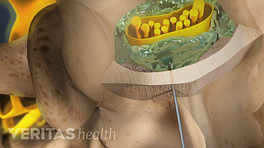
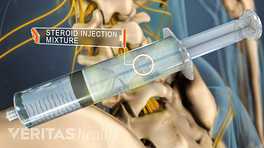
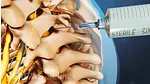
A lumbar epidural injection is usually recommended to treat pain originating from spinal nerve roots. 1 Patel K, Upadhyayula S. Epidural Steroid Injections. [Updated 2019 May 2]. In: StatPearls [Internet]. Treasure Island (FL): StatPearls Publishing; 2019 Jan-. Available from: https://www.ncbi.nlm.nih.gov/books/NBK470189/ This injection is typically considered:
- After initial nonsurgical treatments, such as medications and/or physical therapy, have been tried with insufficient or no pain relief, 2 Patel K, Upadhyayula S. Epidural Steroid Injections. [Updated 2019 May 2]. In: StatPearls [Internet]. Treasure Island (FL): StatPearls Publishing; 2019 Jan-. Available from: https://www.ncbi.nlm.nih.gov/books/NBK470189/ but before surgery is considered.
- If the patient is in too much pain to progress with physical therapy. An epidural injection may provide enough pain relief to engage in rehabilitative therapy.
In This Article:
- Lumbar Epidural Steroid Injections for Low Back Pain and Sciatica
- How Epidural Steroid Injections Work
- Indications for Lumbar Epidural Injections
- Epidural Injection Procedure
- Epidural Steroid Injection Pain Relief Success Rates
- Epidural Steroid Injections: Risks and Side Effects
- Epidural Steroid Injections for Back Pain and Leg Pain Video
Pain relief from these injections may help limit or eliminate the need for oral medications and postpone surgery for a few weeks or months in some cases. 3 Hassan KZ, Sherman Al. Epidural Steroids. [Updated 2019 May 10]. In: StatPearls [Internet]. Treasure Island (FL): StatPearls Publishing; 2019 Jan-.Available from: https://www.ncbi.nlm.nih.gov/books/NBK537320/ , 4 Bicket MC, Horowitz JM, Benzon HT, Cohen SP. Epidural injections in prevention of surgery for spinal pain: systematic review and meta-analysis of randomized controlled trials. The Spine Journal. 2015;15(2):348-362. doi:10.1016/j.spinee.2014.10.011 Sometimes, the need for surgery may also be potentially eliminated.
Epidural Steroid Injections Aim to Reduce Nerve Pain
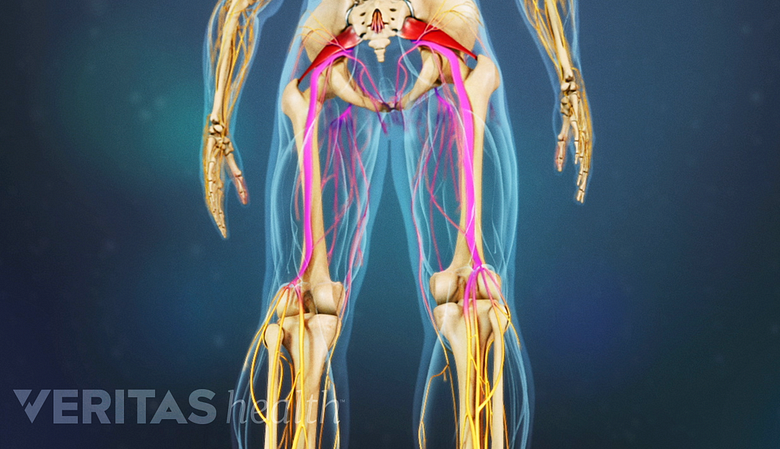
The goal of an epidural steroid injection is to minimize nerve pain from radiating to the leg.
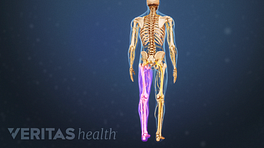
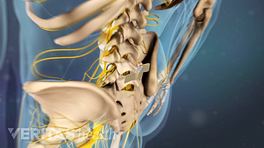
Pain from irritated, inflamed, or compressed lumbar spinal nerve roots usually originate deep in the buttock and travels down the thigh and leg with possible lower back and/or foot pain. This condition is called lumbar radiculopathy and the symptoms are commonly referred to as sciatica.
Epidural steroid injections help control inflammation in lumbar radiculopathy, reducing or eliminating the sciatica symptoms. If the injection is successful in reducing pain, the results may last for a week or up to a year. 1 Patel K, Upadhyayula S. Epidural Steroid Injections. [Updated 2019 May 2]. In: StatPearls [Internet]. Treasure Island (FL): StatPearls Publishing; 2019 Jan-. Available from: https://www.ncbi.nlm.nih.gov/books/NBK470189/
Common Indications for Epidural Steroid Injections
A few common causes of lumbar radiculopathy when epidural steroid injections may be given are discussed below.
Lumbar herniated discs
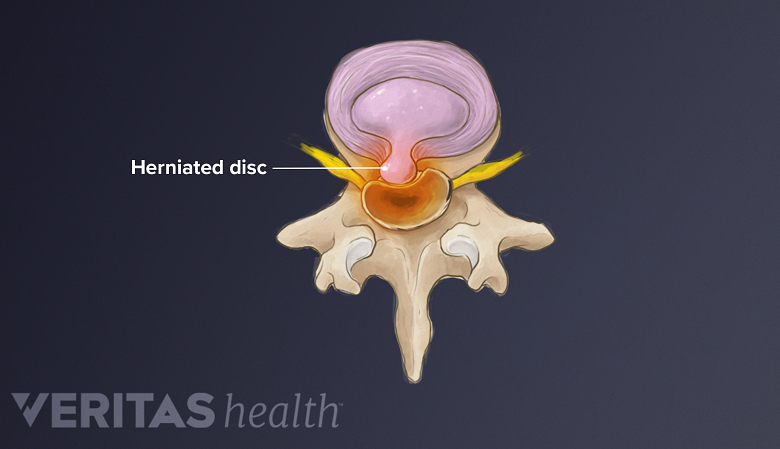
Herniated discs can compress a nearby nerve root.
When a disc herniates, the inner jelly (nucleus pulposus) pushes through the outer fibrous covering (annulus fibrosis), inflaming and/or compressing the adjacent spinal nerve root. This mechanical pressure results in pain, weakness, and/or numbness along the distribution of the nerve. 1 Patel K, Upadhyayula S. Epidural Steroid Injections. [Updated 2019 May 2]. In: StatPearls [Internet]. Treasure Island (FL): StatPearls Publishing; 2019 Jan-. Available from: https://www.ncbi.nlm.nih.gov/books/NBK470189/
See Lumbar Herniated Disc: What You Should Know
Lumbar degenerative disc disease
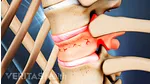
The gradual breakdown of intervertebral discs may cause the collapse of disc space, bringing the adjacent vertebrae closer and resulting in a compression of the corresponding spinal nerve root. 1 Patel K, Upadhyayula S. Epidural Steroid Injections. [Updated 2019 May 2]. In: StatPearls [Internet]. Treasure Island (FL): StatPearls Publishing; 2019 Jan-. Available from: https://www.ncbi.nlm.nih.gov/books/NBK470189/
See Lumbar Degenerative Disc Disease (DDD)
Foraminal spinal stenosis
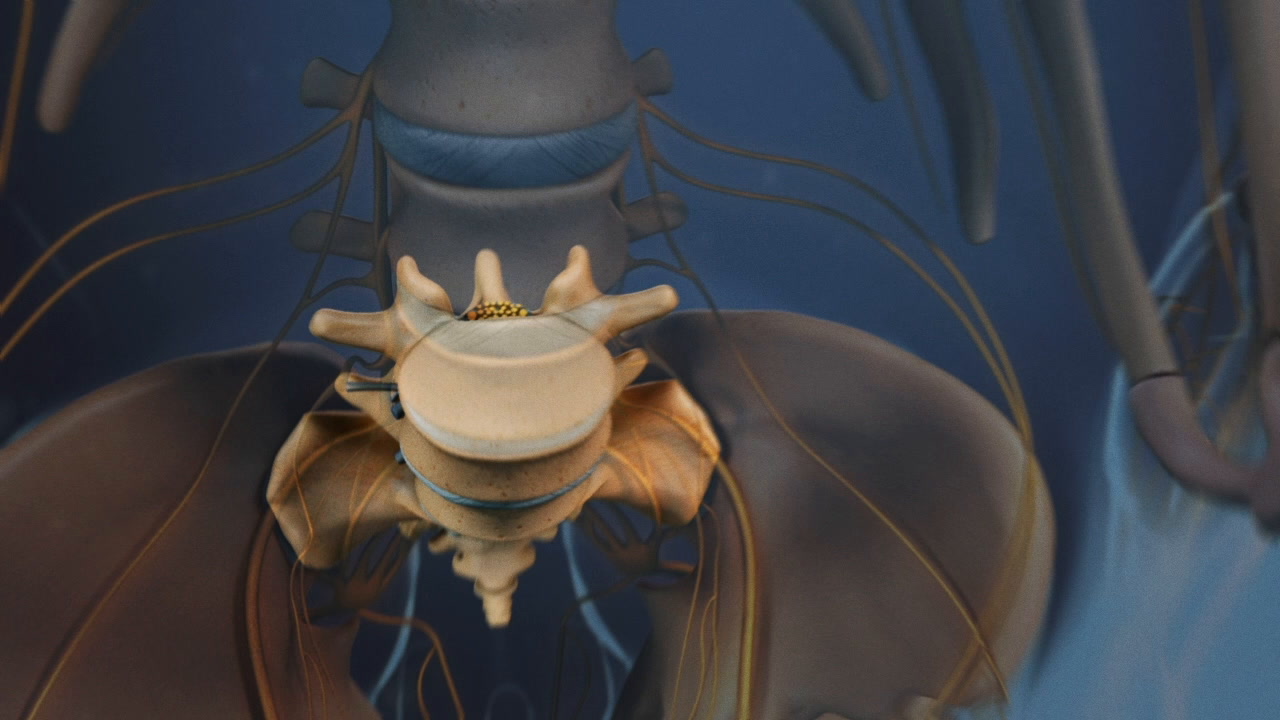
The compression of nerve roots due to narrowing of the bony openings (foramina) for spinal nerves may cause radiculopathy pain. Stenosis may be secondary to herniated discs, degenerative changes in the bone, or arthritis of the vertebral facet joints. 1 Patel K, Upadhyayula S. Epidural Steroid Injections. [Updated 2019 May 2]. In: StatPearls [Internet]. Treasure Island (FL): StatPearls Publishing; 2019 Jan-. Available from: https://www.ncbi.nlm.nih.gov/books/NBK470189/
Epidural steroid injections may also be given to treat nerve pain due to spinal cysts or spondylolisthesis (slipping of one vertebra over the other). 1 Patel K, Upadhyayula S. Epidural Steroid Injections. [Updated 2019 May 2]. In: StatPearls [Internet]. Treasure Island (FL): StatPearls Publishing; 2019 Jan-. Available from: https://www.ncbi.nlm.nih.gov/books/NBK470189/
Less Common Indications for Epidural Steroid Injections
Back pain without radiculopathy may sometimes be treated with epidural steroid injections. A few examples include:
Axial low back pain
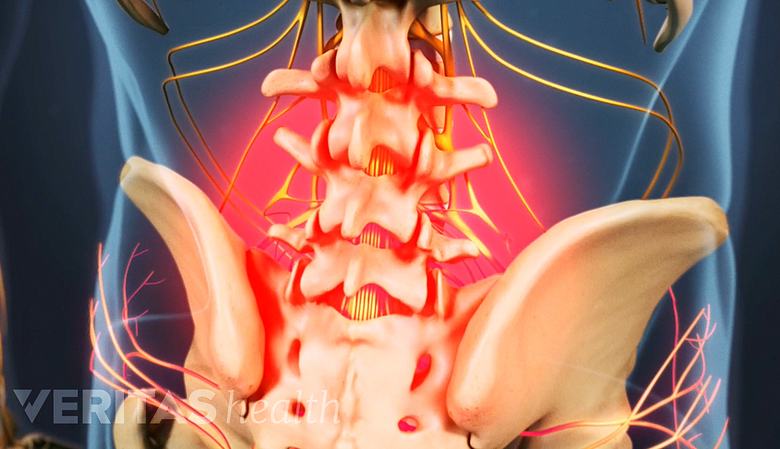
Axial low back pain is a less common indication for epidural steroid injection.
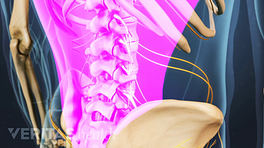
This pain is confined to the lower back and may be caused due to inflammatory changes in the vertebral end plates (bony coverings of the inner surfaces of vertebrae), spinal dura (covering of the spinal cord), or spinal ligaments. 5 Chang, Douglas, Zlomislic, Vinko. Chapter 273. Lumbar Spinal Injections. In: Chapman, Michael W. Chapman's Orthopaedic Surgery. Philadelphia: Lippincott Williams & Wilkins. https://www.researchgate.net/publication/327034223_Lumbar_spinal_injections_Chapman's_Orthopaedic_Surgery_Chapter_273. Accessed June 26, 2019. , 6 Bartleson JD, Maus TP. Diagnostic and therapeutic spinal interventions: Epidural injections. Neurol Clin Pract. 2014;4(4):347–352. doi:10.1212/CPJ.0000000000000043 Axial low back pain can also originate from degenerated discs. 7 Fujii K, Yamazaki M, Kang JD, et al. Discogenic Back Pain: Literature Review of Definition, Diagnosis, and Treatment. JBMR Plus. 2019;3(5):e10180. Published 2019 Mar 4. doi:10.1002/jbm4.10180 In general, injections for axial low back pain is usually considered when associated leg pain is also present.
See Axial Back Pain: Most Common Low Back Pain
Neurogenic claudication
Back pain and leg pain (usually present in both legs) that occurs while walking variable distances and/or bending the spine backward. This pain is usually caused when the central spinal canal is stenosed, compressing the spinal cord. 6 Bartleson JD, Maus TP. Diagnostic and therapeutic spinal interventions: Epidural injections. Neurol Clin Pract. 2014;4(4):347–352. doi:10.1212/CPJ.0000000000000043
See Leg Pain and Numbness: What Might These Symptoms Mean?
In general, epidural steroid injections are more effective when used for the treatment of radiculopathy pain. 1 Patel K, Upadhyayula S. Epidural Steroid Injections. [Updated 2019 May 2]. In: StatPearls [Internet]. Treasure Island (FL): StatPearls Publishing; 2019 Jan-. Available from: https://www.ncbi.nlm.nih.gov/books/NBK470189/ , 3 Hassan KZ, Sherman Al. Epidural Steroids. [Updated 2019 May 10]. In: StatPearls [Internet]. Treasure Island (FL): StatPearls Publishing; 2019 Jan-.Available from: https://www.ncbi.nlm.nih.gov/books/NBK537320/
When Epidural Steroid Injections May Not be Given
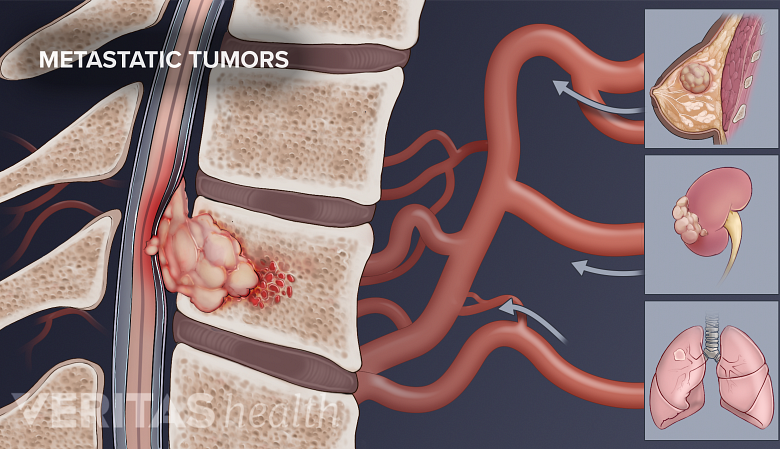
An epidural steroid injection is not indicated in conditions like tumors or cancer.
The presence of certain health conditions may increase the possibility of risks and/or complications following epidural steroid injections. A few examples are discussed below.
Absolute contraindications
Epidural steroids must not be given when the following conditions are present 1 Patel K, Upadhyayula S. Epidural Steroid Injections. [Updated 2019 May 2]. In: StatPearls [Internet]. Treasure Island (FL): StatPearls Publishing; 2019 Jan-. Available from: https://www.ncbi.nlm.nih.gov/books/NBK470189/ :
- Infection in any part of the body, including the site of injection
- Bleeding disorders
- Tumors or cancer
Additionally, the injection must not be used if there is a known allergy to the steroid medication, local anesthetic, or the contrast dye used for fluoroscopy (live x-ray).
Relative contraindications
Epidural steroids may or may not be given when the following conditions are present 1 Patel K, Upadhyayula S. Epidural Steroid Injections. [Updated 2019 May 2]. In: StatPearls [Internet]. Treasure Island (FL): StatPearls Publishing; 2019 Jan-. Available from: https://www.ncbi.nlm.nih.gov/books/NBK470189/ :
- Uncontrolled diabetes mellitus
- Heart problems, such as congestive heart failure
- Pregnancy, especially if fluoroscopy is used
- Osteoporosis
A doctor may decide if the injection may be given in these cases depending on various factors, such as the patient’s age and overall health.
While epidural steroid injections may help control spinal pain for up to 1 year 1 Patel K, Upadhyayula S. Epidural Steroid Injections. [Updated 2019 May 2]. In: StatPearls [Internet]. Treasure Island (FL): StatPearls Publishing; 2019 Jan-. Available from: https://www.ncbi.nlm.nih.gov/books/NBK470189/ , some patients may not experience any benefits from this procedure.
- 1 Patel K, Upadhyayula S. Epidural Steroid Injections. [Updated 2019 May 2]. In: StatPearls [Internet]. Treasure Island (FL): StatPearls Publishing; 2019 Jan-. Available from: https://www.ncbi.nlm.nih.gov/books/NBK470189/
- 2 Patel K, Upadhyayula S. Epidural Steroid Injections. [Updated 2019 May 2]. In: StatPearls [Internet]. Treasure Island (FL): StatPearls Publishing; 2019 Jan-. Available from: https://www.ncbi.nlm.nih.gov/books/NBK470189/
- 3 Hassan KZ, Sherman Al. Epidural Steroids. [Updated 2019 May 10]. In: StatPearls [Internet]. Treasure Island (FL): StatPearls Publishing; 2019 Jan-.Available from: https://www.ncbi.nlm.nih.gov/books/NBK537320/
- 4 Bicket MC, Horowitz JM, Benzon HT, Cohen SP. Epidural injections in prevention of surgery for spinal pain: systematic review and meta-analysis of randomized controlled trials. The Spine Journal. 2015;15(2):348-362. doi:10.1016/j.spinee.2014.10.011
- 5 Chang, Douglas, Zlomislic, Vinko. Chapter 273. Lumbar Spinal Injections. In: Chapman, Michael W. Chapman's Orthopaedic Surgery. Philadelphia: Lippincott Williams & Wilkins. https://www.researchgate.net/publication/327034223_Lumbar_spinal_injections_Chapman's_Orthopaedic_Surgery_Chapter_273. Accessed June 26, 2019.
- 6 Bartleson JD, Maus TP. Diagnostic and therapeutic spinal interventions: Epidural injections. Neurol Clin Pract. 2014;4(4):347–352. doi:10.1212/CPJ.0000000000000043
- 7 Fujii K, Yamazaki M, Kang JD, et al. Discogenic Back Pain: Literature Review of Definition, Diagnosis, and Treatment. JBMR Plus. 2019;3(5):e10180. Published 2019 Mar 4. doi:10.1002/jbm4.10180