
Subscribe to our newsletter and get your FREE guide,
L5-S1 Symptoms Tracker.
Sciatica pain is usually described with a wide variety of characteristics. This pain has the potential to worsen over time and may become debilitating. The pain may come and go or stay for longer periods and may get relieved with certain postures, exercises, and/or medications.
Sciatica Is Lumbar Radiculopathy
Radiculopathy refers to pain caused by the compression of a spinal nerve root(s). Sciatica occurs when one or more nerve roots from L4 to S3 are irritated or compressed due to conditions such as a herniated disc, spinal stenosis, or disc degeneration. Radicular pain from the sciatic nerve root is typically felt in the thigh, calf, and/or foot—away from the actual source of the problem.
See Sciatica Causes
In This Article:
- Types of Sciatic Nerve Pain
- Sciatic Nerve Anatomy Video
- Sciatica Causes and Symptoms Video
Sciatica pain may be accompanied by other symptoms and typically affects one or more regions in the low back, thigh, leg, and foot. If the duration of pain is less than 8 weeks, it is called acute sciatica. Pain duration of more than 8 weeks is described as chronic sciatica.
A few typical characteristics and the possible variations of sciatica pain are discussed below.
advertisement
Nature of Sciatica Pain
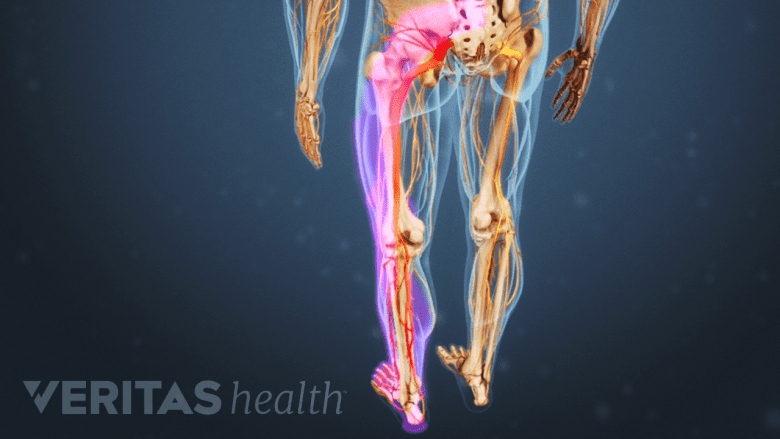
Sciatic pain is typically felt like a shock-like shooting sensation on one side.
Pain is usually the first symptom of sciatica and typically indicates nerve irritation or inflammation. Most commonly, a sharp, burning, or searing pain may be felt that affects only one leg.
A few examples of other types of pain that may be felt include:
- Electric shock-like, shooting pain
- Throbbing or pulsating pain
- Constant dull ache
- Discomfort that comes and goes
Rarely, sciatica may affect both legs together. Pain alternating between the right and left leg is also possible.
Areas Affected by Sciatica Pain
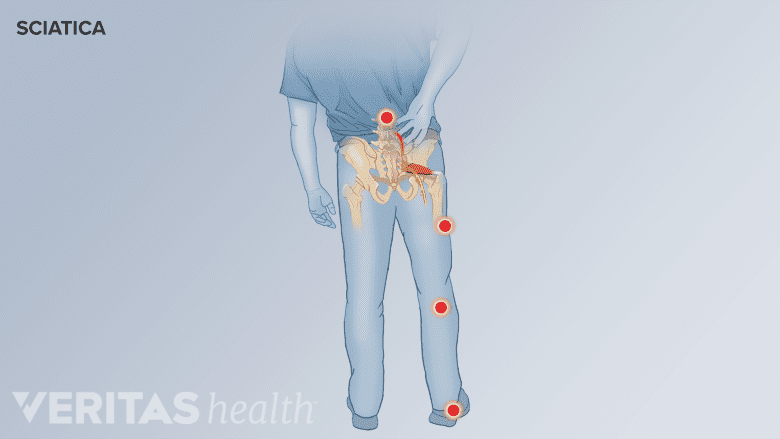
Sciatica causes symptoms in the low back, buttock, side of the leg, and/or foot.
Sciatica pain occurs along the path of the sciatic nerve and/or its branches. Commonly, the back and outer part of the thigh and/or leg are affected.
The other potential regions that can be affected by sciatica pain are:
- Low back
- Front of the thigh and/or leg
- The top and outer side of the foot
- Sole of foot
- The web between the first and second toes
In sciatica, leg pain is typically more severe than back pain.
Neurological Symptoms That May Accompany Sciatica Pain
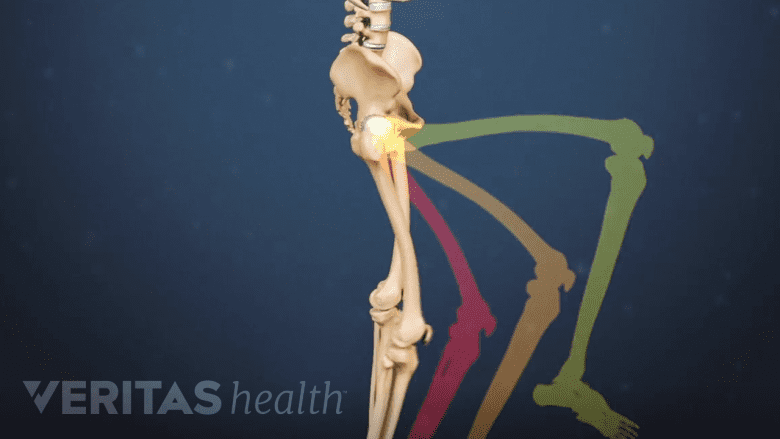
Overtime, sciatica may cause leg weakness and numbness, making it difficult to walk.
When the sciatic nerve is compressed, one or more neurological symptoms may accompany the pain.
A few examples of accompanying symptoms include:
- Weakness in the thigh muscles. When the thigh muscles are affected, there may be a weakness felt while attempting to bring the thighs together.
Weakness in the leg and foot muscles. When the leg muscles are affected, there may be weakness while attempting to bend the knee or while pointing the foot and/or toes upward and/or downward. These issues may result in a foot drop—difficulty in lifting the front part of the foot while walking. There may also be difficulty in rising from a sitting position or attempting to walk on tiptoes.
Numbness. Loss of sensation may occur when the nerve impulses are not able to pass through the sciatic nerve. Common areas affected by numbness are the side of the calf and/or the heel, sole, and/or top of the foot.
Read more about Understanding Sciatica Symptoms: Pins and Needles, Numbness, Icy, and Burning
- Paresthesia. An abnormal sensation felt on the skin due to improper nerve conduction. This sensation may include tingling, tightness, pins-and-needles, and/or a crawling feeling along the back of the thigh and/or leg
See Leg Pain and Numbness: What Might These Symptoms Mean?
Neurological symptoms may result in reduced function of the affected leg and is more common when the sciatic nerve is compressed.
advertisement
When Sciatic Pain Is a Medical Emergency
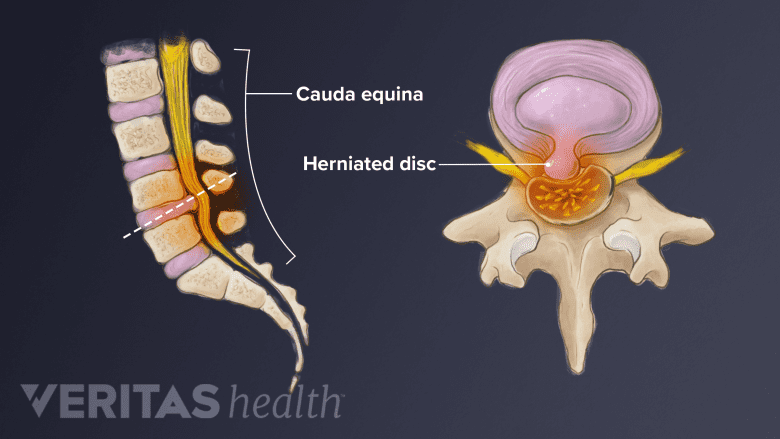
Compression of the cauda equina nerves is a medical emergency.
While quite rare, there are times when sciatica symptoms may indicate a potentially serious injury to the sciatic nerve. A medical emergency is indicated when:
- The sciatica pain is severe or there is a sudden increase in pain
- There is loss of bowel and/or bladder control
- The sciatica pain is accompanied by fever, nausea and/or weight loss
See When Sciatica Pain Is a Medical Emergency
These symptoms can indicate serious underlying conditions such as cauda equina syndrome, infection, or spinal tumors.
Typically, it is best to consult a medical professional for an accurate diagnosis, as a wide range of issues can affect the sciatic nerve, causing symptoms. Treatments that target the underlying cause of sciatica symptoms, rather than palliative approaches that only relieve symptoms, will be most effective for long term pain resolution.
Watch Sciatica Treatment Video

advertisement