





Subscribe to our newsletter and get your FREE guide,
L5-S1 Symptoms Tracker.
A flareup of sciatica symptoms may be attenuated with self-care measures that can be done at home. Self-care is typically effective for sciatica pain that has lasted for less than 8 weeks.
If the pain is chronic, does not get better with self-treatment, or is accompanied by other troubling symptoms, it is advisable to consult a doctor before trying self-care.
There are myriad methods and products that have the potential to significantly relieve sciatica pain. This article focuses on what can be done at home, without a prescription, to address symptom flareups.
In This Article:
Topical Medication
Topical medications reduce inflammation and provide localized relief for lower back pain.
Pain-relieving creams and tinctures may be applied on the skin with the goal of providing immediate, localized pain relief. These medications alter the blood flow in the region to create a numbing effect, and/or decrease inflammation in the affected region.
Topical medications are available over the counter (OTC) in the form of gels, creams, patches or tinctures/oils. Common preparations include medications containing:
- Methyl salicylate
- Menthol
- Trolamine salicylate
- Capsaicin
- Camphor
- Cannabidiol (CBD)
Some formulations may contain a combination of drugs (compounded products), such as menthol and methyl salicylate or menthol and camphor.
advertisement
OTC Medication
NSAIDs may help alleviate sciatica pain.
Sciatica pain may be reduced with the use of non-prescription non-steroidal anti-inflammatory drugs (NSAIDs) such as aspirin, ibuprofen, or naproxen. Pain-relieving drugs such as acetaminophen can also be used for relief from sciatic pain.
These drugs travel through the blood and have a whole-body effect. Pain relief typically occurs 30 minutes to 2 hours after the medicine is taken depending on the dosage.
Massage
Massage may help loosen tight muscles, relax soft tissues, and induce a calming effect.
Massaging the lower back, rear pelvis, and/or the thigh can help relieve acute sciatica pain by local stimulation of tissues. A massage helps to loosen tight muscles, relax soft tissues, and create a calming effect. Massages may be done using medicated, pain-relieving oils or creams for better efficacy. When performing a self-massage or massage by a person other than a certified therapist, care must be taken not to manipulate the exact spot where the pain originates—to avoid the symptoms from getting worse.
Lumbar Stabilizing Brace
A lumbar brace may help stabilize the spine and relieve sciatica pain.
A brace worn over the lower back may help support and stabilize the lower lumbar and sacral spine and control sciatica pain from conditions such as spondylolisthesis (slipping of a vertebra over the adjacent lower vertebra). Stabilizing braces usually contain supporting steel rods that limit the forward and backward bending of the spine. Some braces also help stabilize the spine in a slightly forward bent position to relieve pain from conditions such as nerve root irritation and unstable facet joints.
See Using a Back Brace for Lower Back Pain Relief
Care must be taken when using lumbar stabilizing braces in order to not allow the underlying core muscles to atrophy (wasting of muscles due to lack of physical activity). Bracing for more than a few hours should be done under the supervision of a qualified physician.
advertisement
Transcutaneous Electric Nerve Stimulation (TENS)
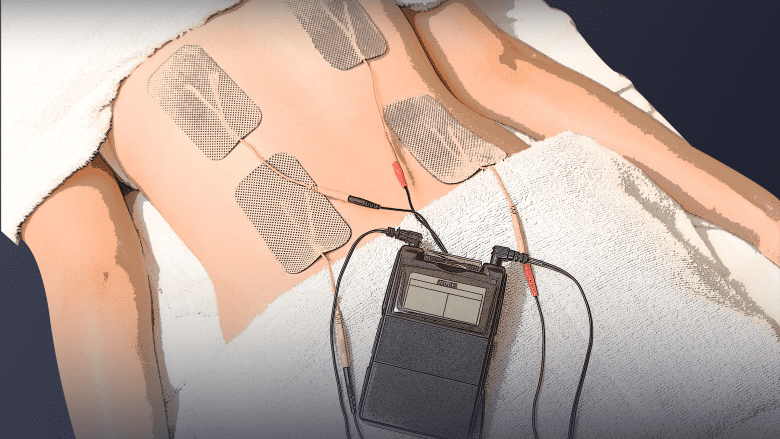
TENS therapy uses electrical stimulation to relieve pain by targeting nerves.
TENS therapy involves activating sensory nerve fibers through a tolerable frequency of electric current. The electric current is delivered through electrodes placed on the skin, attached to a TENS unit. TENS therapy is known to reduce sciatic nerve pain by the production of endorphins—a hormone secreted by the body that reduces pain. TENS therapy is usually safe and can be done at home. A TENS unit can be purchased online or at a drug store without a doctor’s prescription.
Studies show that TENS therapy of 20 to 45 minutes significantly increases the endorphin levels in the body for effective pain control. A 60-minute session is considered appropriate when using TENS to treat sciatica.
Trying one or more of these methods may help control the symptoms of sciatica at home. A process of trial and error, as well as combining 2 or more approaches, may be necessary to determine the best sciatica pain-relieving technique(s).
Learn more about Sciatica Treatment and Sciatica Surgery

advertisement