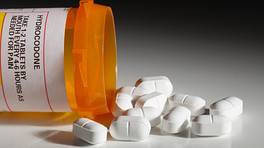
Opioid medications are strong pain relievers widely used to treat back pain. These medications change the perception of pain by weakening pain signals to the brain. Emotions are also affected, leading to a feeling of enhanced well-being and sleepiness in many people.
See Medications for Back Pain and Neck Pain
Opioids are derived from the opium poppy plant or made synthetically. Some opioids contain both opium-derived and synthetic material.
Because of the potential side effects, risks, and complications of opioids, and the body's increasing tolerance to opioids over time, these medications are most clearly indicated for treatment of short-term intense pain, such as acute postoperative pain. If used to treat pain for longer periods, close monitoring is essential.

In This Article:
- Opioid Pain Medications
- Opioid Medication Potential Risks and Complications
- Medications for Back Pain Video
Common Types of Opioids
Opioids vary in strength and have different uses. They are available in immediate and extended-release forms.
Opioids are classified by the U.S. Drug Enforcement Agency based on their medical benefits and potential for abuse or dependence. The classification goes from Schedule I to Schedule V, with the drugs considered most dangerous having the lowest numbers.
Common opioids include:
Schedule II
- Fentanyl (brand names Actiq, Abstral, Duragesic, Fentora, Lazanda, Subsys) is designed for cancer patients who have flares of pain (sometimes called breakthrough pain) that are not controlled by other medications. It is available as a nasal spray, tablets, lozenges, and as a patch. Fentanyl is an extremely strong pain medication and distribution of some forms is restricted.
- Hydrocodone (brand names Hysingla ER, Lortab, Norco, Vicodin, Zohydro ER, and others) is often combined with acetaminophen (Vicodin) or other non-opioid medication, and is designed for pain that is moderate to moderately severe.
- Hydromorphone (brand names Dilaudid, Exalgo) is intended for moderate to severe pain. It is available in multiple forms, including liquid and tablets. Extended-release forms are also offered.
- Meperidine (brand names Demerol, Meperitab) is advised for moderate to severe pain, and is available as a syrup, injectable solution, or tablet.
- Methadone is used to treat pain as well as for detoxification from illicit opioids, such as heroin. It is available as a tablet, liquid, or a small disc that can be added to water or certain other liquids.
- Morphine (brand names Kadian, MS Contin, Embeda, MorphaBond, Roxanol, and others) is commonly used to treat intense pain related to surgery. Patients may be given this medication for a short time intravenously in the hospital. It is also available as a tablet, oral solution, and in other forms. Extended release formulations are other options.
- Oxycodone (brand names OxyContin, Xtampza ER, Roxicodone, Percocet, Percodan, and others) is often combined with a non-opioid pain reliever, such as acetaminophen or aspirin. It is available in different forms, including as an oral solution and tablets. Extended-release tablets are also available. Oxycodone is an option for moderate to severe pain.
- Tapentadol (brand name Nucynta) is intended for moderate to severe pain. Extended-release tablets are available.
Schedule III
- Buprenorphine ((BuTrans/Belbuca, Suboxone) relieves moderate to severe pain and is also used to treat opioid addiction. It is available as a tablet and as various films that dissolve in the mouth.
Schedule III and Schedule V
- Codeine is often combined with non-opioid pain medications, such as acetaminophen. It is typically used for less serious pain. Codeine is sold in multiple forms, including as a tablet, suspension, and liquid. Codeine may be best known for its use as a cough syrup. Codeine tablets are classified as Schedule III and codeine liquid is Schedule V.
Schedule IV
- Tramadol (brand names ConZip, Synapryn, Rybix ODT, Ryzolt, Ultram, Ultram ER) is generally recommended for patients with moderate to moderately severe pain. It is available as a tablet, capsule, and orally disintegrating tablet, and for extended release (ER). Tramadol may also be combined with acetaminophen (e.g. Ultracet).
All of these medications require a prescription. Some are also available in injectable form. When a pain patch is used, care must be taken to avoid touching the sticky side of the patch. If contact occurs, the medication should be rinsed off thoroughly (without using soap).
See Specialty Care Physicians and Pain Management
Concern about misuse of prescription opioid pain medications has led to creation of prescription monitoring programs, abuse-deterrent formulations, and other initiatives in many states to curb abuse. Sometimes, a prescriber will ask a patient to sign a pain treatment agreement. Depending on the state, patients taking these medications may also be required to undergo a physical exam or periodic urine tests, and may have to work more closely with doctors than in the past.