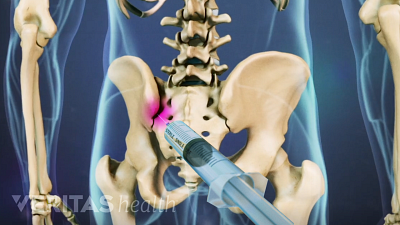
Spinal fusion surgery for low back pain has gotten quite a bad reputation for delivering poor results. Because it is a painful, dangerous, and costly surgery, surgeons should only offer spinal fusion surgery for the most severe symptoms and clearly defined pathology, but sadly this is not always the case.
An unbelievable first opinion
In my practice, I saw as a second opinion a young man who had been offered a three level fusion by another surgeon - a prominent academic surgeon at a medical school in a different area. This 19 year-old male was debilitated with low back pain and bilateral leg pain that was made worse with activity. The young man was taking large doses of oral narcotics to control his pain and had already maximized his non-surgical treatments, including three epidural injections.
The only abnormalities that his MRI scan revealed were congenital stenosis of his lumbar spine, made somewhat worse at L4-L5 by a slightly bulging disc. The surgeon recommended and booked this young man for a three level decompression, instrumentation, and fusion and told him that, "additional levels of the spine may need to be fused once they see what is going on during surgery."
This is truly an unbelievable opinion. The chance that a three level fusion would relieve the patient's pain is only about 50%, AND there is a 50% chance that the surgery would actually make his pain worse.
Even if the fusion did provide pain relief, it would only be temporary until the next level of the spine wore out and started causing pain. The spine is meant to move and fusing three levels, especially in a 19 year old, completely alters the biomechanics of the spine. In the spine surgery world, the term "fusion disease" is used to describe the ongoing or worsening pain that follows a multilevel fusion.
Get a correct preoperative diagnosis
This young man's scan and x-rays did not show any pathology that would warrant a fusion.
The number one determining factor whether or not a fusion surgery will deliver the desired reduction in pain is a proper preoperative diagnosis that clearly identifies the cause of the patient's pain.
I can't stress this enough. Fusion surgery does work very well for discrete pathology. Severe degenerative disc disease of one (or maybe two) level(s), spondylolisthesis, tumor, fracture or infection all can be successfully treated with a fusion that removes the motion at a painful motion segment. But this young man did not have any of these problems, so a fusion would be unlikely to help him. At the most, a one or two level decompression surgery to treat the spinal stenosis could have been considered to treat the pain.
Patients need to question surgery
There is no way to justify a reckless use of fusion surgery such as the recommendation that this man received, and it typifies what is wrong with fusion surgery today. At best, that surgeon does not understand what pathology is and is not amenable to a fusion procedure. At worst, he is motivated purely by a profit motive and does not care about the damage and pain he is inflicting on patients.
Having a three-level fusion at age 19 would have severely damaged this patient's life forever. Using a newer fusion technique (i.e. minimally invasive surgery) does not improve the final outcome. It may not cause as much tissue disruption as a traditional fusion, but the ultimate clinical outcome is still dependent on an accurate preoperative diagnosis.
Get educated
It just takes a few unskilled and/or irresponsible surgeons to ruin a lot of people's lives. Patients should take all precautions to get educated about their options and understand exactly why the surgeon is doing the surgery, the risks and benefits, and their other options, before deciding on fusion surgery.
Further reading: Indications for Spinal Fusion and How and When to Get a Second Opinion before Spine Surgery

Comments
after fusion of L4 and L5 now have issues with L3 and L2
I had spinal fusion in August 2012 and now in March 2013 after another MRI L3 and L2 are compromised and I have a great deal of pain on the opposite from the original sciatic pain. Is this common so soon and what are my options?
Kim Millhorn
L5 S1 fusion
i have spinal fusion 10 days ago and am suffering with spasms is this normal. if not what do i do now
Cervical Traction
I've been having treatments for my neck with my physio for over 2 months now and am curious about this cervical traction I keep hearing about. Click here to see the one that I'm thinking of getting. Could this be an alternative to surgery? Surgery scares me but I will do anything to get rid of this pain.