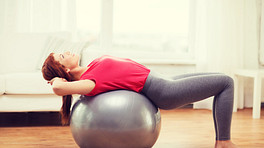
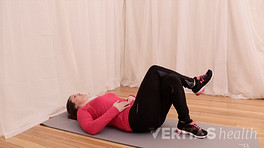
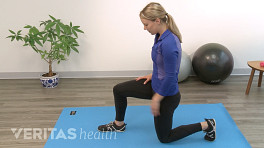
The exercise ball is an exercise treatment option for back pain sufferers and is designed to help prevent or minimize further episodes of low back pain as part of a rehabilitation program. The exercise ball is effective in rehabilitation of the back because it strengthens and develops the core body muscles that help to stabilize the spine.
Watch: Video: 5 Overlooked Tips to Protect Your Lower Back
With the exercise ball, also called a Swiss ball or physio ball, an element of instability is introduced to the exercise that one would not normally get in a floor exercise. The body responds naturally and automatically to this instability to keep balanced on the exercise ball. Over time, the muscles used to keep in balance on the exercise ball become stronger. In essence, individuals build strength in important back muscles and abdominal muscles without knowing it.
The exercise ball also uses what is called "proprioception," an awareness of where one's hand or foot is in relationship to space. The instability of the exercise ball provides the body with constant opportunities to evaluate its orientation in space, developing and training the body's natural awareness. Enhanced proprioception provides the body with increased balance and stability.
In This Article:
- Exercise Ball Therapy for Lower Back Pain Relief
- About Exercise Balls
- Exercise Ball Uses
- Commonly Prescribed Exercise Ball Workouts for Back Pain
- Core Body Strength Exercises
- Exercise Ball Precautions
- Video: Why is Exercise Important for Lower Back Pain?
In addition, it is theorized that the type of spinal movement induced by using the exercise ball (small range, adjustment of balance) may help reduce pain by stimulating the body to produce increased amounts of natural pain inhibitors.
The benefits of exercising on an exercise ball for people with low back pain include:
- Simple and versatile way to start moving again after a back pain episode
- Improved muscle strength
- Greater flexibility and range of motion of the spine
- Enhanced balance and coordination of core muscle groups used to stabilize the spine and control proper posture while using the exercise ball, which in turn reduces stress on the low back
- Increased tendency to maintain a neutral spine position during exercise
- In particular, many Swiss ball exercises are designed to bring movement to the spine in a controlled manner to help keep the discs nourished. Moving the vertebrae helps nourish the discs in the spine by increasing blood flow around the disc and by causing the water to flow in and out of the disc
The exercise ball has additional applications in areas such as general fitness, strength or weight training, as well as exercise for pregnant women.
For all forms of exercise, it is advisable to see an appropriately trained and licensed spine specialist, such as a physical therapist, occupational therapist, chiropractor, exercise physiologist, or physical medicine and rehabilitation physician (also called a physiatrist). Depending on the specific diagnosis and level of pain, the exercises with the ball will be different, and appropriately trained spine specialists (e.g. certified in exercise ball technique) play a critical role in both developing the right exercise program and providing instruction on correct form and technique.