If osteoporosis is detected early, it can be treated and prevented from getting significantly worse. However, many people are not diagnosed until they experience complications from fractures. Because osteoporosis is generally an age-related condition, screening is recommended for all women over age 65 and men over age 70 in order to determine the need for diagnostic testing. 1 Final Recommendation Statement: Osteoporosis to Prevent Fractures: Screening. U.S. Preventive Services Task Force. https://www.uspreventiveservicestaskforce.org/Page/Document/RecommendationStatementFinal/osteoporosis-screening1. July 2018. Accessed April 2019.
An osteoporosis evaluation can distinguish whether or not osteoporosis is related to natural aging (primary osteoporosis) or to a separate health issue affecting bone growth (secondary osteoporosis).
In This Article:
Evaluating Risk for Osteoporosis
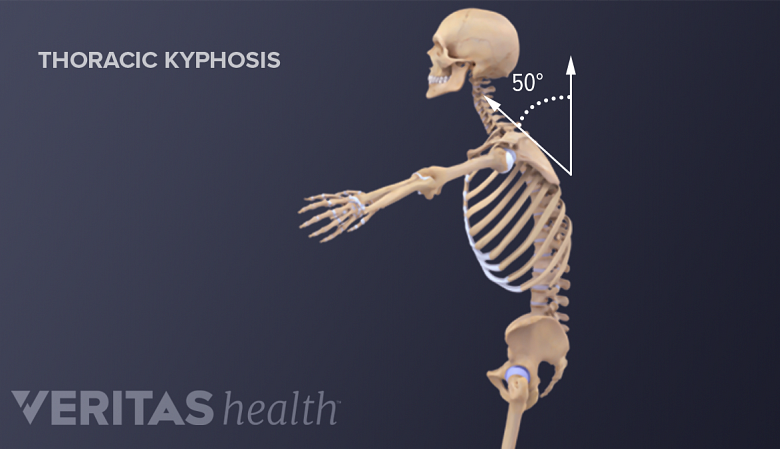
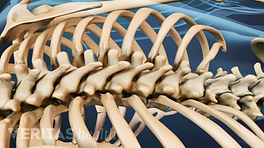
In diagnosing osteoporosis, the doctor checks for an excessive curvature of the upper back.
Screening for osteoporosis consists of a complete medical history and physical exam focused on identifying signs of the condition and symptoms associated with its complications.
See Preparing to See A Doctor for Back and Neck Pain
A medical history assesses general risk factors, such as a family history of osteoporosis and health conditions that could predispose one to low bone density (causing secondary osteoporosis).
The physical exam checks for the following:
- A hunch or emphasized curve of the upper back (thoracic spine), called hyperkyphosis or kyphosis
- Increased inward curve in the lower back with the abdomen protruding outward
- Loss of overall body height
If a person is screened and found to be at-risk for osteoporosis and/or has outward signs of the condition, diagnostic testing is ordered.
Diagnostic Testing for Osteoporosis
The following tests may be used to diagnose osteoporosis by assessing bone density, identifying vertebral fractures, and identifying or ruling out causes of secondary osteoporosis.
DEXA scan
The gold standard for diagnosing osteoporosis is a dual energy x-ray absorptiometry (DEXA or DXA) scan, also called a bone densitometry scan. This test measures bone density, and is particularly receptive to changes in bone density associated with osteoporosis.
A DEXA scan follows a fairly straightforward procedure:
- The patient lies on a table on his/her back.
- A scanning arm moves over the patient, emitting a low dose of x-rays into the lumbar spine, the hip, and/or the wrist. In some machines, the arm only contains the detector, with the x-ray source under the exam table.
- Images from the scan are produced on a computer, which calculates the bone density.
DEXA scan results are measured by T-scores, which compare bone density to the young adult populations, and by Z-scores that compare bone density to a similar population as the patient in terms of age, size, and sex. These results may indicate healthy bone density, somewhat lower bone density (osteopenia), and significantly lower bone density with a high risk of fracture (osteoporosis).
The goal of a DEXA scan is to indicate whether a patient is at an increased risk of fracture due to low bone density. This scan is painless and associated with very limited radiation exposure.
Vertebral imaging
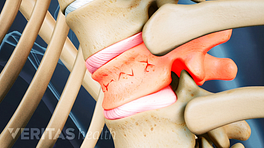
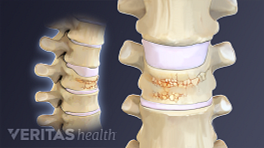
A conventional x-ray may be taken of the lower back (lumbar spine), upper back (thoracic spine), or neck (cervical spine) to confirm a suspected vertebral fracture. Additionally, vertebral imaging is used to identify any existing spinal fractures that are not causing symptoms.
See Diagnosing Vertebral Compression Fractures
A vertebral fracture assessment may be performed on the thoracic and lumbar spine at the same time as a bone mineral density test on a DEXA machine. This tool takes an x-ray image of the spine using lower radiation exposure than a standard x-ray.
Blood tests
A blood test may be ordered to assess:
- Calcium levels or deficiency
- Vitamin D deficiency
- Hormone levels, particularly estrogen, parathyroid hormone (PTH), and sometimes testosterone.
- Biochemical markers that indicate bone remodeling and formation
Additionally, laboratory tests are used to rule out any potential causes of secondary osteoporosis, such as hyperthyroidism or diabetes. Blood tests for primary osteoporosis may be taken in the morning after avoiding food or drink for several hours, as this is when biochemical markers are most notable in the blood.
- 1 Final Recommendation Statement: Osteoporosis to Prevent Fractures: Screening. U.S. Preventive Services Task Force. https://www.uspreventiveservicestaskforce.org/Page/Document/RecommendationStatementFinal/osteoporosis-screening1. July 2018. Accessed April 2019.