Lumbago is the general term referring to low back pain, and the two terms are often used interchangeably.
In This Article:
- Understanding Low Back Pain (Lumbago)
- Diagnosing the Cause of Lower Back Pain
- Axial Back Pain: Most Common Low Back Pain
- Low Back Pain with Referred Pain
- Lumbar Radiculopathy
- Video: What is Lumbago?
Principles of Lumbago
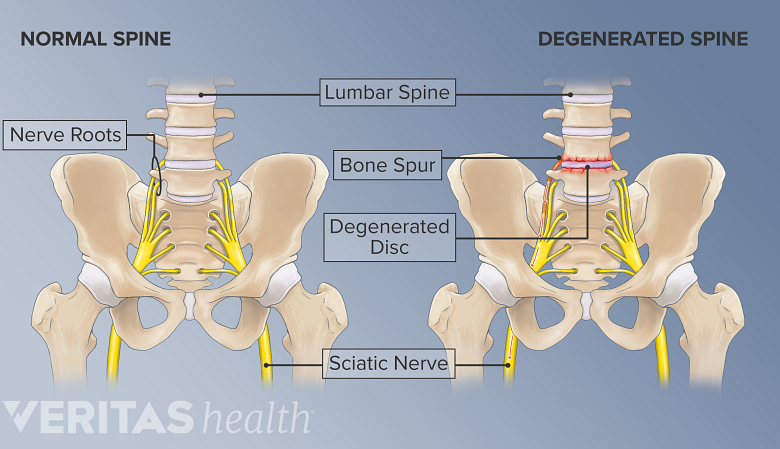
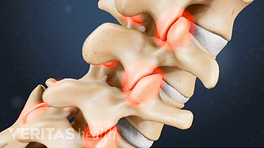
A range of conditions can affect different parts of the lumbar spine, causing pain.
Before discussing the specific types of low back pain, it is important to understand a few important principles.
Pain does not always reflect the extent of the damage
The severity of pain from low back problems is often unrelated to the extent of physical damage present. For example, a simple pulled muscle in the low back can cause excruciating pain that can limit one’s ability to walk or even stand, whereas even a large herniated disc can be completely painless.
Diagnosis is often difficult
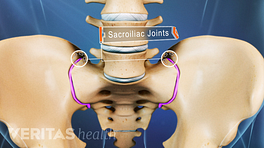
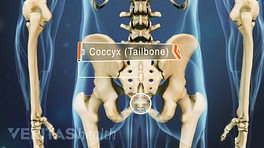
There are many anatomical structures in the low back that can cause severe lower back pain and/or pain that radiates into the legs and/or feet. These include:
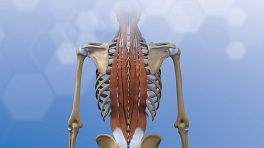
- Soft tissues, such as muscles, ligaments and tendons
- Bones, which provide the structural building blocks of the spinal column
- Facet joints, which allow the spine move
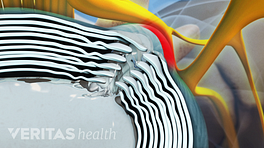
- Discs (the outer rim of the disc, the annulus, can be a source of significant low back pain due to its rich nerve supply and tendency towards getting damaged)
- Nerves, which branch out from the spinal cord in the low back and innervate the legs and feet
All of the above structures are interwoven to make up the structure of the spine. During embryological development, there is a great deal of overlap of nerve supply to all of these structures making it nearly impossible for the brain to distinguish between problems with one structure versus another. For example, a torn or herniated disc can feel identical to a bruised muscle or torn ligament.
Factors that Affect the Diagnosis

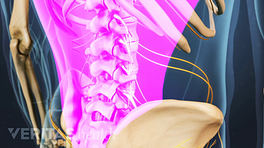
Understanding lower back pain and its distribution helps identify the underlying cause(s) accurately.
The underlying causes of low back pain can be complex and are not always readily apparent. When determining the underlying cause of lower back pain, two main factors help guide the physician in making a preliminary diagnosis:
- The type of low back pain – meaning a description of how the pain feels, what makes it better or worse when it occurs, and
- The area of pain distribution – meaning where the pain is felt, if it is confined to the low back, or if the accompanying leg pain is worse than the low back pain, or if the pain radiates elsewhere in the body.
See Lower Back Pain Symptoms, Diagnosis, and Treatment
Diagnostic accuracy is important
Getting an accurate diagnosis as to the underlying cause of one’s pain is important if there are warning signs or “Red Flags” present. These would include weakness of the legs, significant numbness, loss of bowel or bladder control, fevers or chills or significant unexplained weight loss. If these symptoms are not present, then conservative treatment may commence without the need for obtaining an immediate diagnosis with an MRI.
Finally, it is important to note that - unlike many other medical conditions - the experience of low back pain tends to be different for many people. For example, two people can have the exact same condition, but for one it is incapacitating and for the other it is a mere nuisance. In fact, for most people a spinal abnormality (such as a degenerated disc that can be seen on an MRI scan) is painless. In addition, other factors – psychological, emotional, and financial – often contribute to and influence a person’s experience of low back pain.