Many people with lumbar spine stenosis find that they can successfully manage their condition through an easy self care program.
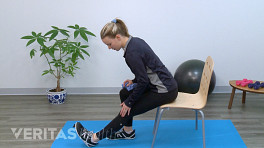
This article presents a range of approaches an individual can take to manage lower back pain and other symptoms associated with lumbar stenosis, including exercise and staying active, pain management, posture and nutrition.
In This Article:
- Living with Lumbar Spinal Stenosis
- Exercises for Lumbar Spinal Stenosis
- Pain Management of Lumbar Stenosis
- Posture and Nutrition Adjustments for Lumbar Stenosis
An Overview of Lumbar Spine Stenosis
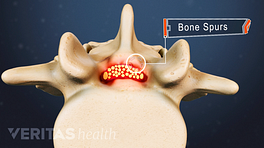
Our bodies go through changes as we age. In the spine, the vertebrae may develop arthritis, the intervertebral discs may bulge, and the ligamentum flavum (a strong ligament that connects the liminae of the vertebrae) may buckle. All of these changes, alone or in combination, may lead to spinal stenosis. The condition is essentially a “stenosis” (from the Greek word meaning “choking”) of the spine. It is most common in people over 50 years of age.
Not all people with x-ray, MRI, or CT findings of spinal stenosis will have symptoms. In fact, as with osteoarthritis of the knee or hip and with other sources of back pain, imaging findings do not necessarily correlate with degree of symptoms. That is, symptoms may be much worse or less severe than one would suspect from looking at the degree of stenosis on imaging studies.
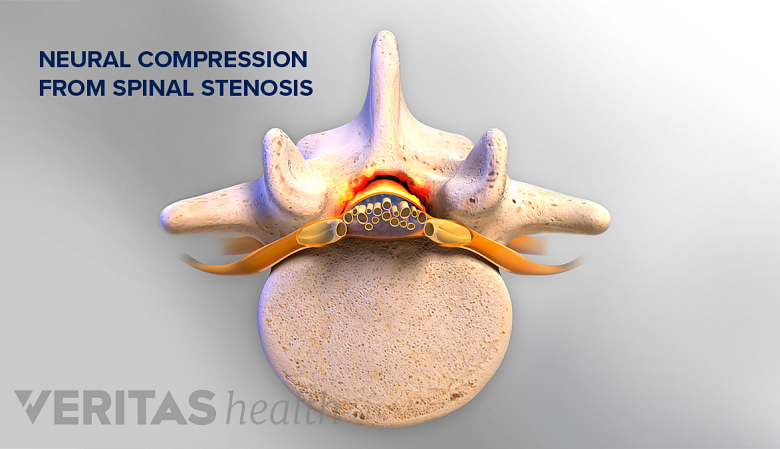
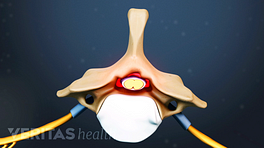
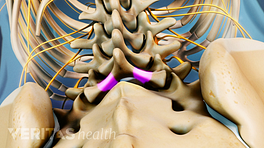
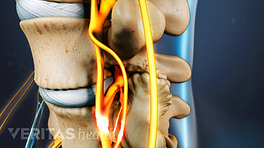
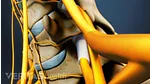
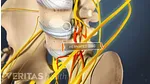
Lumbar stenosis narrows the spinal canal, leading to lower back pain, leg pain, numbness, and weakness.
Symptoms of lumbar spine stenosis usually include leg pain (sciatica), numbness, tingling and/or burning. In severe cases, there may also be leg weakness. Low back pain may also be present, however the leg pain is usually more severe. Osteoarthritis of the facet joints may also occur.
Lumbar spine stenosis symptoms generally develop over a prolonged period of time and are:
- Intermittent
- Worse with activities in which the patient is bending the trunk backwards
- Better with leaning forwards (as with sitting).
In fact, often patients will say that in the grocery store, they don’t have any symptoms. When asked for more details, the patient realizes that in the grocery store, he or she is leaning on the shopping cart, and thus flexing the trunk forward. By flexing forward, the spinal canal is “opened up” and the pressure is taken off the nerves and nerve roots. For the same reason, walking uphill is often easier and less painful for people with lumbar spinal stenosis (note that the trunk is flexed when walking uphill) than when walking downhill (where the trunk is extended, thus compressing the spinal canal and causing symptoms).
Diagnosing Lumbar Spine Stenosis
Patients with symptoms of leg pain, numbness, tingling, burning and/or weakness need to get evaluated by a doctor to get a diagnosis for the cause of their symptoms. There are problems other than lumbar spinal stenosis that may cause these symptoms.