Herniated Disc

Thoracic Disc Herniation Treatment

By: David DeWitt, MD
Font size

The vast majority of symptomatic thoracic disc herniations can be treated without surgery. There are a variety of non-surgical treatment options that can be tried, and often patients will need to try several, or a combination of different treatments, to find what works best for them.

Non-operative Treatments

Non-surgical treatment options for upper back pain and other symptoms from a thoracic herniated disc will typically include one or a combination of the following:

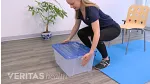
  • A short period of rest (e.g. one or two days) activity modification (eliminating the activities and positions that worsen or cause the pain). After a short period or rest, the patient should return to activity as tolerated. Gentle exercise, such as walking, is a good way to return to activity.
Article continues below
  • Narcotic and non-narcotic analgesic medications to help reduce the pain. Narcotic pain medication is usually only prescribed to treat severe pain for a short period of time. For mild or moderate pain, an over the counter pain reliever such as acetaminophen (e.g. Tylenol) is commonly recommended.
  • Anti-inflammatory agents, to help reduce inflammation around the herniated disc in the upper back, including:
    • Medications (NSAIDs - such as ibuprofen or a COX-2 inhibitor - or oral steroids)
    • Anti-inflammatory injections (such as an epidural steroid injection)
    • Ice packs, applied to the painful area for 15–20 minutes at a time, as often as necessary
  • Manual manipulation (usually performed by a chiropractor or osteopath)
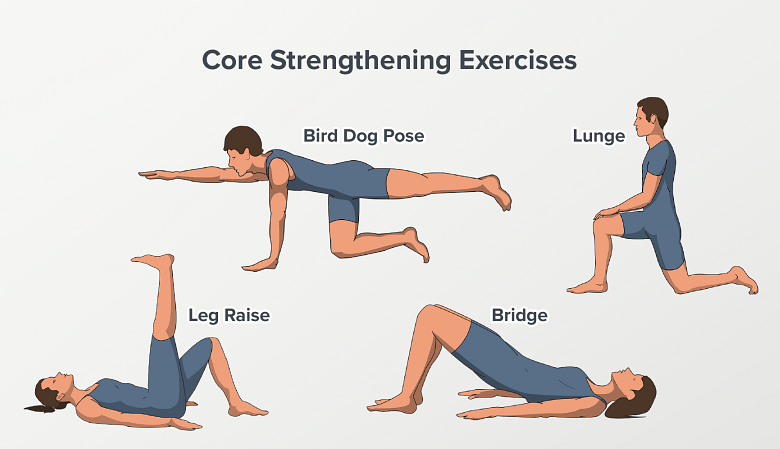
  • Strengthening exercises, such as core stabilization exercises

The patient’s activity levels should be progressed gradually over a 6 to 12 week period as symptoms improve. In the vast majority of cases, the natural history of thoracic disc herniation is one of improvement with one or a combination of the above conservative (non-operative) treatments.

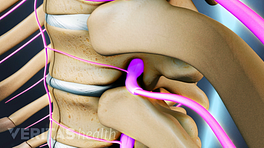
Surgery for a Thoracic Herniated Disc

Operative intervention is indicated in only rare instances when a herniated disc leads to myelopathy (spinal cord dysfunction), progressive neurologic deficits, or intolerable pain. Typically, these symptoms occur following an acute traumatic disc herniation with myelopathy. The surgery to address these symptoms, called a decompression, is designed to take the pressure off the spinal cord or nerve root.

Historically, the surgical approach for a decompression was performed via a posterior approach through a laminectomy. Outcomes were poor in large part because retraction on the spinal cord is not well tolerated and most thoracic disc herniations have a central component that cannot be reached without spinal cord retraction. More recently, one of the following surgical approaches will be used:

  • For central and centro-lateral herniations an anterior trans-thoracic approach is used which can be done as an open thoracotomy. This involves approaching the spine through the chest cavity (instead of through the back). In some centers, the procedure may be done as a minimally invasive VATS (Video Assisted Thoracic Surgery) procedure, which involves the use of several small incisions, small scopes and a video screen.
  • Lateral disc herniations can be reached through posterolateral approach known as a costotransversectomy, which involves removal of rib and transverse process (a small bone attached to the spine) to allow access to the disc space.

Operative treatment is reserved for cases of myelopathy, progressive lower extremity weakness, and intolerable radicular pain that does not get better with non-operative treatments.

In cases where surgery was indicated, Bohlman and Zdeblick evaluated 19 patients treated with either costotransversectomy or trans-thoracic decompression of a thoracic disc herniation. There were 16 patients with good or excellent outcomes and 3 patients with fair or poor results. Two poor outcomes were in the costotransversectomy group leading to their opinion that the trans-thoracic approach should be the preferred approach2.

In a separate study, Reagan, BinYashay, and Mack reported 76% satisfactory results in 29 patients who underwent a Video Assisted Thoracic Surgery procedure3, the minimally invasive trans-thoracic approach to the thoracic disc space.

References:

  1. Wood KB, Garvey TA, Gundry C, Heithoff KB: Magnetic resonance imaging of the thoracic spine. J Bone Joint Surg Am. 77:1631-1638, 1995.
  2. Bohlman HH, Zdeblick TA: Anterior excision of herniated thoracic discs. J Bone Joint Surg Am. 70:1038-1047, 1988.
  3. Regan JJ, Mack MJ, Picetti GD: A technical report on video-assisted thoracoscopy in thoracic spinal surgery. Spine. 20:831-837,1995.
Pages:
David DeWitt, MD
October 17, 2006