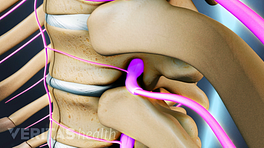
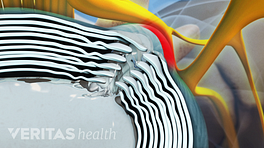
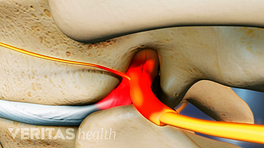
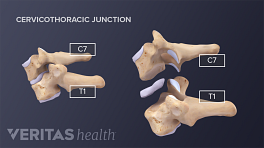
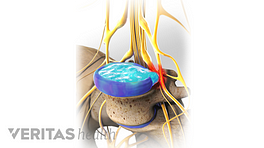
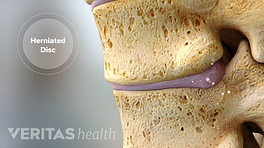
A herniated disc in the upper back can occur when the inner gelatinous material of an intervertebral disc leaks out of the inside of the disc. A thoracic herniated disc can cause upper back pain and other symptoms, such as radiating pain or numbness.
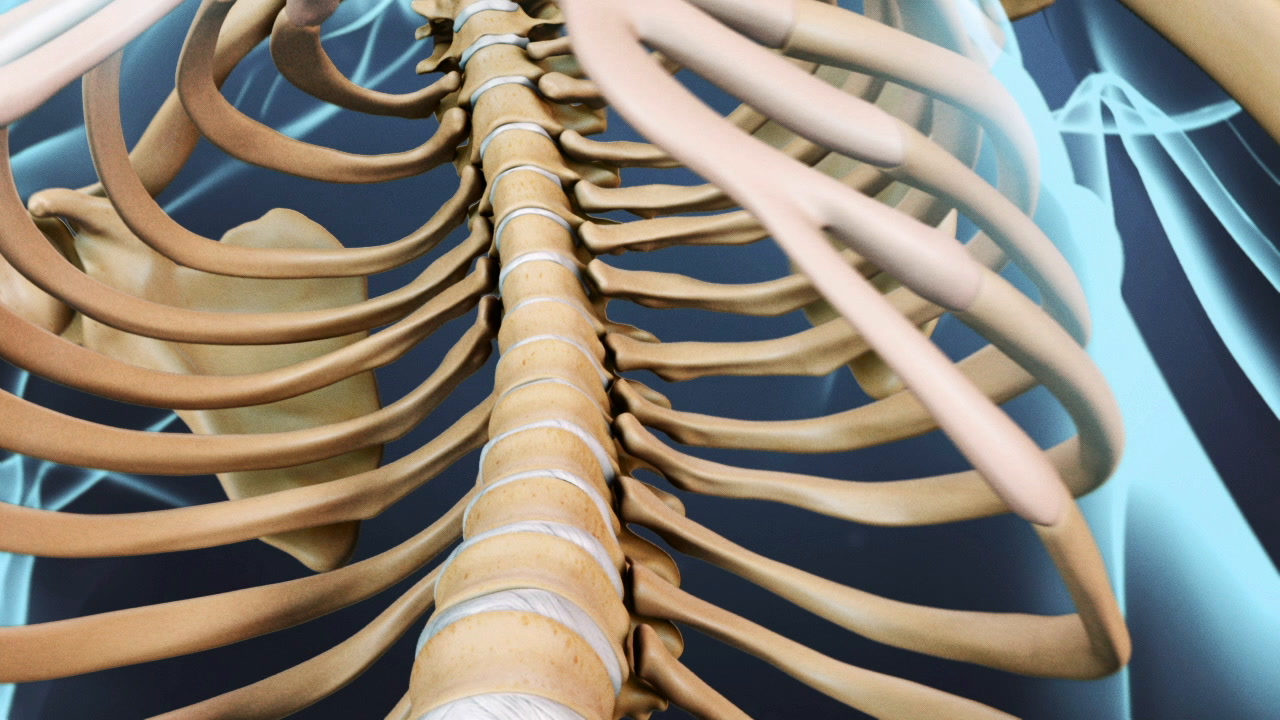
Specific symptoms of a thoracic herniated disc are usually different depending on where the disc herniates, as the herniated disc material in the upper back can either impinge on an exiting nerve root or on the spinal cord itself.
In This Article:
- Upper Back Pain from a Thoracic Herniated Disc
- Thoracic Herniated Disc Causes
- Thoracic Disc Herniation Symptoms
- Thoracic Herniated Disc Diagnosis
- Thoracic Disc Herniation Treatment
- Thoracic Herniated Disc Surgery
- Thoracic Herniated Disc Video
Thoracic Degenerative Disc Disease
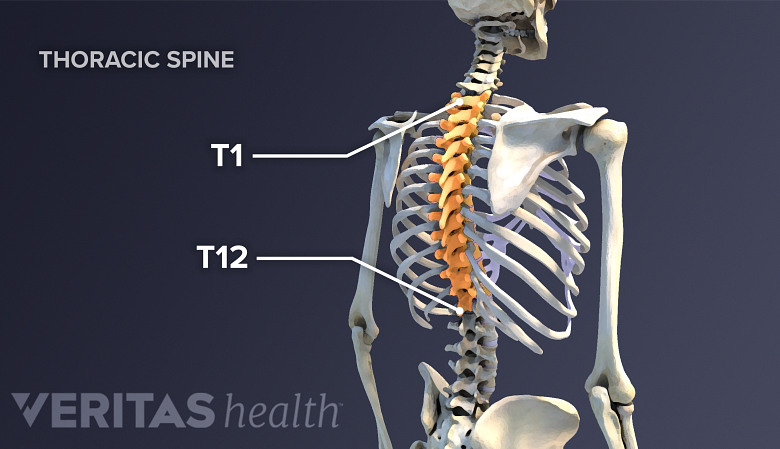
Disc-related pain is less common in the mid back.
Thoracic disc disease is conceptually similar to disc disorders in the cervical and lumbar spine, but symptomatic lesions (anatomical problems related to the symptoms) are far less common.
The most common location for thoracic disc disorders is at the thoracolumbar (the thoracic and lumbar parts of the spinal column) junction (T8-T12) in the mid back. The true incidence is unknown because many thoracic disc disorders do not cause thoracic back pain or other symptoms, and they comprise only a very small percent of all herniated disc treatment surgeries.
In one study, 90 asymptomatic patients (with no pain or other symptoms) were evaluated with thoracic MRI scans. These were the findings:
- 73% of patients were found to have disc abnormalities in the upper back, such as a thoracic herniated disc or thoracic degenerative disc disease
- 37% specifically had a thoracic herniated disc
- 29% had radiographic evidence of spinal cord impingement identified on the MRI.
These patients were followed for 26 months and none of them developed thoracic back pain from their thoracic disc disorders. 1 Wood KB, Garvey TA, Gundry C, Heithoff KB: Magnetic resonance imaging of the thoracic spine. J Bone Joint Surg Am. 77:1631-1638, 1995.
The fact that so many people had thoracic herniated discs but no pain or symptoms is important to mention, as it shows that people may have both upper back pain and a thoracic herniated disc, but that the disc disorder may not be the cause of the thoracic back pain – it may just be an incidental finding.
In fact, there are many causes of upper back pain that are much more common than a herniated disc, and a correct diagnosis of the cause of the patient’s pain is more important than whether or not an MRI scan shows a thoracic disc herniation.
- 1 Wood KB, Garvey TA, Gundry C, Heithoff KB: Magnetic resonance imaging of the thoracic spine. J Bone Joint Surg Am. 77:1631-1638, 1995.